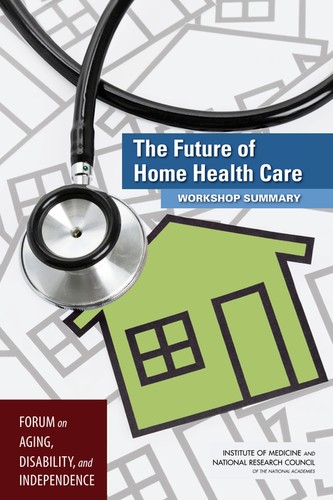
The Future of Home Health Care
0
0
As an Amazon Associate and affiliate partner, Menrva Books earns from qualifying purchases. Learn more
Author Description
Individuals with disabilities, chronic conditions, and functional impairments need a range of services and supports to keep living independently. However, there often is not a strong link between medical care provided in the home and the necessary social services and supports for independent living. Home health agencies and others are rising to the challenges of meeting the needs and demands of these populations to stay at home by exploring alternative models of care and payment approaches, the best use of their workforces, and technologies that can enhance independent living. All of these challenges and opportunities lead to the consideration of how home health care fits into the future health care system overall. On September 30 and October 1, 2014, the Institute of Medicine and the National Research Council convened a public workshop on the future of home health care. The workshop brought together a spectrum of public and private stakeholders and thought leaders to improve understanding of the current role of Medicare home health care in supporting aging in place and in helping high-risk, chronically ill, and disabled Americans receive health care in their communities. Through presentations and discussion, participants explored the evolving role of Medicare home health care in caring for Americans in the future, including how to integrate Medicare home health care into new models for the delivery of care and the future health care marketplace. The workshop also considered the key policy reforms and investments in workforces, technologies, and research needed to leverage the value of home health care to support older Americans, and research priorities that can help clarify the value of home health care. This summary captures important points raised by the individual speakers and workshop participants. - Publisher.
Menrva's Summary
THE THESIS
The future of home health care is examined through the lens of independent living for individuals with disabilities and chronic conditions. The book addresses the disconnect between medical home care and essential social services, exploring how agencies are adapting through new care models, payment strategies, workforce optimization, and technology integration. It specifically considers the role of Medicare home health care in supporting aging in place and community-based care for high-risk populations. The content is derived from a 2014 workshop convened by the Institute of Medicine and the National Research Council, featuring discussions among public and private stakeholders on policy reforms, workforce and technology investments, and research priorities.
THE SCOPE MAP
- Analysis of current Medicare home health care services for aging in place and community-based care.
- Exploration of alternative models for care delivery and payment approaches.
- Discussion on workforce challenges and technological enhancements for independent living.
- Consideration of policy reforms and investments needed to support home health care.
- Identification of research priorities to clarify the value of home health care.
THE AUTHORITY PERSPECTIVE
This compilation of insights from a 2014 workshop offers a forward-looking perspective on home health care. The discussions highlight the critical need to integrate medical services with social support systems to enable independent living for vulnerable populations. The content suggests a focus on adaptive strategies, including innovative care models, workforce development, and technological adoption, to meet evolving demands. The overall perspective emphasizes the potential of home health care to become a more central component of the future healthcare system.
Page Count:
168
Publication Date:
2015-01-01
ISBN-10:
0309367530
ISBN-13:
9780309367530
Politics
Health
Non-Fiction
Gerontology
Policy
Community Tags
Similar Books