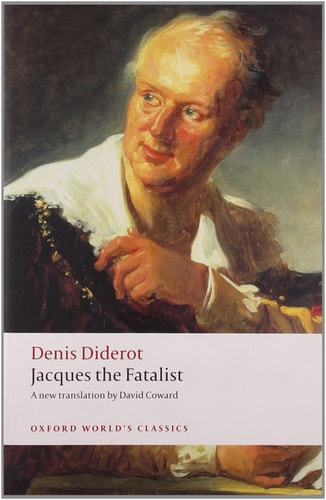
Jacques the Fatalist
0
0
As an Amazon Associate and affiliate partner, Menrva Books earns from qualifying purchases. Learn more
Author Description
Jacques the Fatalist is a provocative exploration of the problems of human existence, destiny, and free will. In the introduction to this brilliant translation, David Coward explains the philosophical basis of Diderot's fascination with fate and examines the experimental and influential literary techniques that make Jacques the Fatalist a classic of the Enlightenment.About the Series: For over 100 years Oxford World's Classics has made available the broadest spectrum of literature from around the globe. Each affordable volume reflects Oxford's commitment to scholarship, providing the most accurate text plus a wealth of other valuable features, including expert introductions by leading authorities, voluminous notes to clarify the text, up-to-date bibliographies for further study, and much more.
Menrva's Summary
THE PULSE
Jacques and his master embark on a rambling journey, debating the nature of fate and the extent of human agency. Jacques, a servant who adheres to a philosophy of fatalism, recounts his past romantic entanglements to his master while they travel across the French countryside. Their dialogue is constantly interrupted by external events, digressions, and the intrusive commentary of an omniscient narrator who challenges the reader's expectations of linear storytelling. The narrative framework is self-reflexive and experimental, frequently breaking the fourth wall to address the reader directly about the construction of the story itself.
INSIDE THE PAGES
- Metafictional commentary that disrupts the narrative flow
- Socratic dialogue exploring the tension between determinism and free will
- Picaresque structure involving a master and servant on the road
- Nonlinear storytelling with frequent flashbacks and nested anecdotes
- Satirical critique of 18th-century social hierarchies and literary conventions
- Intertextual references to contemporary philosophical debates
- Unreliable narration that questions the authority of the storyteller
- Philosophical inquiry into the nature of morality and human behavior
THE COLLECTIVE ECHO
Readers and critics frequently highlight the work's innovative structure, which anticipates many techniques associated with postmodern literature. Discussion often centers on the playful, subversive tone Diderot employs to dismantle traditional narrative expectations. The balance between the philosophical discourse on fatalism and the comedic interactions between the two protagonists remains a primary focus for scholars. Many appreciate how the text forces the reader to actively participate in the construction of meaning rather than passively consuming the plot. The work is widely recognized as a significant contribution to Enlightenment thought due to its skepticism and intellectual rigor.
Page Count:
258
Publication Date:
2009-08-31
Publisher:
Oxford University Press
ISBN-10:
019953795X
ISBN-13:
9780199537952
Fiction
Philosophy
Satire
classic
Enlightenment