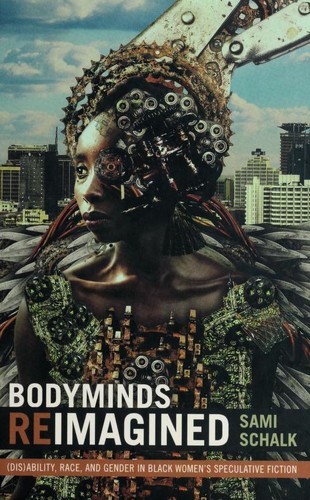
Bodyminds Reimagined
0
0
As an Amazon Associate and affiliate partner, Menrva Books earns from qualifying purchases. Learn more
Author Description
Traces how black women's speculative fiction complicates the understanding of bodyminds - the intertwinement of the mental and the physical - in the context of race, gender and (dis)ability. Bridging black feminist theory and disability studies, th author demonstrates that this genre's political potential lies in the authors' creation of bodyminds that transcend reality's limitations. She reads (dis)ability in neo-slave narratives by Octavia Butler ("Kindred") and Phyllis Alesia Perry ("Stigmata") not only as representing the literal injuries suffered under slavery, but also as a metaphor for the legacy of racial violence. The fantasy worlds in works by N.K. Jemisin, Shawntelle Madison, and Nalo Hopkinson - where werewolves have obsessive-compulsive disorder and blind demons can see magic - destabilize social categories and definitions of the human, calling into question the very nature of identity. in these texts, as well as in Butler's "Parable" series, able-mindedness and able-bodiedness are socially constructed and upheld through racial and gendered norms. Outlining (dis)ability's centrality to speculative fiction, the author shows how these works open up new social possibilities while changing conceptualizations of identity and oppression through nonrealist contexts.
Menrva's Summary
THE THESIS
This book investigates how Black women's speculative fiction reimagines the interconnectedness of mind and body within the frameworks of race, gender, and disability. It argues that the genre's political power emerges from authors' creation of 'bodyminds' that defy physical and mental limitations. By analyzing works from authors like Octavia Butler, N.K. Jemisin, and Nalo Hopkinson, the book demonstrates how these narratives use speculative elements to explore the legacy of racial violence and challenge social constructs of ability and identity.
THE SCOPE MAP
- Analysis of neo-slave narratives by Octavia Butler and Phyllis Alesia Perry, interpreting (dis)ability as both literal injury and a metaphor for racial violence.
- Examination of fantasy worlds in works by N.K. Jemisin, Shawntelle Madison, and Nalo Hopkinson, focusing on how characters with specific conditions (e.g., OCD, blindness) destabilize social categories.
- Exploration of how able-mindedness and able-bodiedness are presented as socially constructed through racial and gendered norms in speculative fiction.
- Demonstration of how (dis)ability is central to speculative fiction, opening new social possibilities.
- Discussion of how nonrealist contexts in speculative fiction alter conceptualizations of identity and oppression.
- Bridging of Black feminist theory and disability studies to understand the political potential of these literary works.
THE AUTHORITY PERSPECTIVE
The book is an academic study that bridges Black feminist theory and disability studies, analyzing how Black women's speculative fiction complicates understandings of 'bodyminds.' It highlights the genre's political potential through authors' creation of bodyminds that transcend reality's limitations. The work examines how texts by Octavia Butler, N.K. Jemisin, and others use speculative elements to address racial violence, social constructs of ability, and identity. This approach reveals how these narratives open new social possibilities by challenging traditional conceptualizations of oppression within nonrealist contexts.
Page Count:
180
Publication Date:
2018-01-01
ISBN-10:
0822370735
ISBN-13:
9780822370734
Fiction
History
Non-Fiction
Feminist Theory
Literary Criticism
Speculative Fiction
Black studies
Community Tags
Similar Books