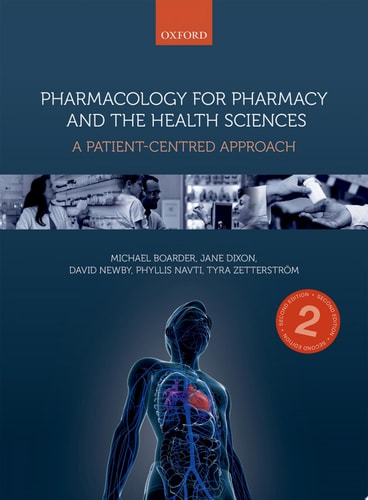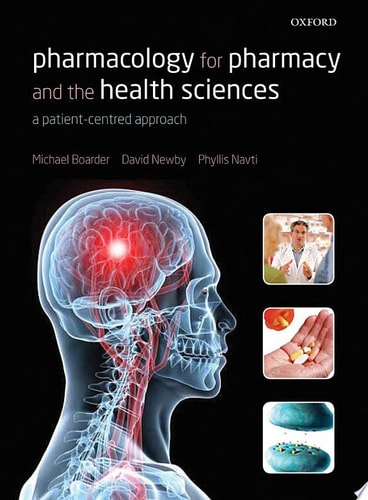
Pharmacology for Pharmacy and the Health Sciences: A Patient-Centred Approach
0
0
As an Amazon Associate and affiliate partner, Menrva Books earns from qualifying purchases. Learn more
Author Description
The issuing of prescription drugs is a routine part of life - and something that few of us give a second thought to once the treatment is within our grasp. But what happens when the drug is administered? How do drugs interact with the body at the cellular and molecular level? What different therapeutic options are available for treating different conditions, and how do these options weigh up in terms of their impact upon the patient?Pharmacology for Pharmacy and the Health Sciences provides an understanding of drug action at the cellular and molecular level, which is interfaced seamlessly with an explanation of the clinical use of drugs to treat common clinical conditions.Taking a novel patient-centred approach, the book features a series of embedded workbooks, which develop clinical topics in the context of individual patients and their experience of illness, to relate the scientific basis of pharmacology to real-life pharmacy practice.The workbooks provide a highly structured student-directed educational environment in which the reader understands more and memorises less. They help the reader to interpret presenting symptoms, hospital clinical clerking and patient history notes, and understand the therapeutic strategy and clinical outcome, all within a simple student-friendly format.The patient-centred approach does not come at the expense of providing a sound scientific framework: each workbook is preceded by an explanation of the pathophysiology of the clinical conditions featured, and the pharmacological basis of the drugs used in each therapeutic area.Pharmacology for Pharmacy and Health Science is the perfect course companion for anyone needing to develop a solid understanding of pharmacology and its impact on pharmacy and clinical practice.
Menrva's Summary
THE THESIS
This text investigates the fundamental mechanisms of drug action at the cellular and molecular level while simultaneously exploring their practical application in clinical patient care. The authors, David Newby, Michael Boarder, and Phyllis Navti, utilize their expertise in pharmaceutical education to bridge the gap between abstract biochemical theory and the realities of clinical practice. By integrating pathophysiology with therapeutic strategy, the book provides a structured framework for students to understand how pharmacological interventions directly impact patient outcomes.
THE SCOPE MAP
What You Will Find
- Detailed explanations of drug interactions at the cellular and molecular level.
- Embedded workbooks that simulate real-life pharmacy practice and clinical decision-making.
- Analysis of pathophysiology for common clinical conditions alongside corresponding pharmacological treatments.
- Methodologies for interpreting patient history, clinical notes, and presenting symptoms.
THE AUTHORITY PERSPECTIVE
Educators and students frequently highlight this text as a highly effective pedagogical tool due to its focus on conceptual understanding rather than rote memorization. Experts note that the patient-centred workbook format provides a practical, structured environment that successfully prepares pharmacy students for real-world clinical environments.
Page Count:
693
Publication Date:
2010-05-20
Publisher:
Oxford University Press
ISBN-10:
0199559821
ISBN-13:
9780199559824
Pharmacy
Pharmacology
Textbooks
Medicine
Health Sciences
Community Tags
Similar Books