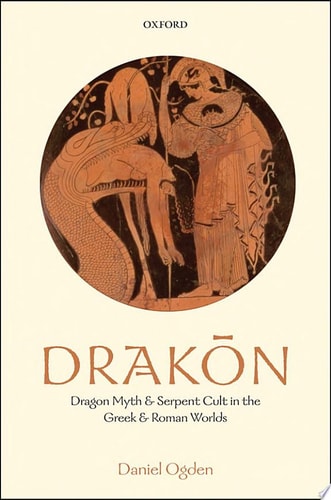
Drakon: Dragon Myth and Serpent Cult in the Greek and Roman Worlds
0
0
As an Amazon Associate and affiliate partner, Menrva Books earns from qualifying purchases. Learn more
Author Description
Drakon: Dragon Myth and Serpent Cult in the Greek and Roman Wolrds is the first substantial survey to be focally devoted to the "dragon" or the supernatural serpent, the drakon or draco, in Greek and Roman myth and religion. Almost every major myth cycle of the Greek and Roman worlds featured a dragon-fight at its heart, including the sagas of Heracles, Jason, Perseus, Cadmus, and Odysseus. Asclepius, the single most beloved and influential of the pagan gods from the late Classical period until Late Antiquity, was often manifest as a giant serpent and even in his humanoid aspect carried a serpent on his staff.Detailed and authoritative, but lucidly presented, this volume incorporates analyses of all of antiquity's major dragon-slaying myths, and offers comprehensive accounts of the rich sources, literary and iconographic. Ogden also explores matters of cult and the initially paradoxical association of dragons and serpents with the most benign of deities, not only those of health and healing, like Asclepius and Hygieia, but also those of wealth and good luck, such as Zeus Meilichios and Agathos Daimon. The concluding chapter considers the roles of both pagan dragon-slaying narratives and pagan serpent cults in shaping the beginnings of the tradition of the saintly dragon- and serpent-slaying tales we cherish still, the tradition that culminates in our own stories of Saints George and Patrick.
Menrva's Summary
THE THESIS
This volume investigates the cultural, religious, and mythological significance of the drakon, or supernatural serpent, within the framework of ancient Greek and Roman societies. Daniel Ogden, a scholar of classical antiquity, synthesizes a vast array of literary and iconographic evidence to argue that the serpent was a central, multifaceted figure in the ancient world. He examines how these creatures functioned simultaneously as fearsome adversaries in heroic myth and as benevolent symbols of health, wealth, and divine protection. The work provides a comprehensive analysis of how these pagan traditions influenced the later development of Christian hagiography and saintly legends.
THE SCOPE MAP
What You Will Find
- Comprehensive analysis of major dragon-slaying myths including Heracles, Jason, and Perseus.
- Examination of serpent cults associated with deities such as Asclepius, Hygieia, and Zeus Meilichios.
- Integration of primary source material from both classical literature and ancient iconography.
- Investigation into the transition of serpent symbolism from pagan antiquity to medieval Christian traditions.
THE AUTHORITY PERSPECTIVE
Experts recognize this work as a foundational survey that fills a significant gap in the study of classical mythology and religious practice. Readers frequently note the academic rigor and clarity of the prose, which makes complex iconographic analysis accessible to both students and specialists.
Page Count:
496
Publication Date:
2013-05-05
Publisher:
Oxford University Press
ISBN-10:
0199557322
ISBN-13:
9780199557325
Religion
History
Dragons
Rome religion
Greece
Folklore
Mythology
Community Tags
Similar Books