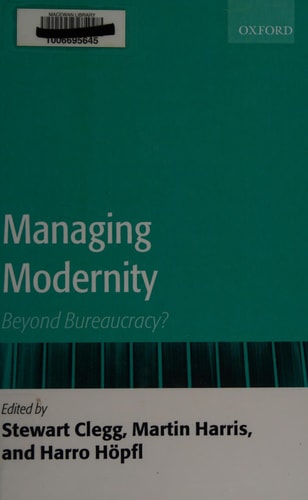
Managing Modernity: Beyond Bureaucracy?
0
0
As an Amazon Associate and affiliate partner, Menrva Books earns from qualifying purchases. Learn more
Author Description
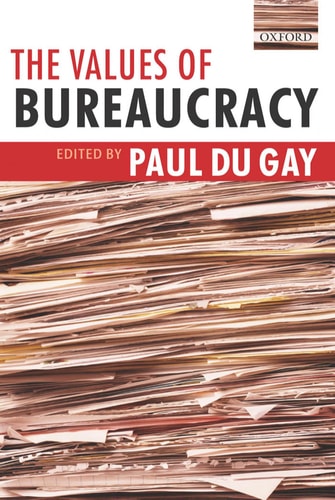
Bureaucracy has long been a cornerstone of advanced industrial societies, and a defining feature of modernity. At the same time, many commentators from all quarters argue that it is on the wane in this post-this or that world; or that if it isn't, it should be dismantled to free up organizations, enterprise, and innovation.But do we live in a more or less bureaucratic world? Do contemporary forms and means of communication undermine or modify bureaucracy, or does technology create new 'iron cages' and forms of control? If bureaucratic models of organization are abandoned, do we run risks of organizational failure and inequity? Are there certain moral, professional, and social values associated with bureaucratic models?This book explores these issues in different organizational contexts - public administration, the National Health Service, the modern firm and corporation - and offers new insights into enduring questions. It will be an invaluable resource for academics, researchers, and students in organization studies, management, public administration, and sociology. The volume will also appeal to managers, planners, and policy makers who deal with these challenges.
Menrva's Summary
THE THESIS
This volume investigates whether the traditional bureaucratic model remains a viable or dominant structure in contemporary society amidst claims of its decline. The authors, Harro Hopfl, Martin Harris, and Stewart R. Clegg, draw upon their expertise in organizational theory and sociology to examine the tension between modern technological advancement and established administrative frameworks. By analyzing the evolution of control mechanisms, the text argues that the perceived obsolescence of bureaucracy may be premature, suggesting instead that it is undergoing a complex transformation rather than a total disappearance.
THE SCOPE MAP
What You Will Find
- Comparative analysis of bureaucratic structures across public and private sectors.
- Examination of the impact of digital communication on organizational hierarchy.
- Case studies focusing on the National Health Service and modern corporate entities.
- Theoretical inquiry into the moral and professional implications of abandoning formal organizational models.
THE AUTHORITY PERSPECTIVE
Experts recognize this text as a significant contribution to the discourse on organizational change and institutional theory. Scholars and students of management frequently cite the work for its balanced approach to the enduring relevance of bureaucratic systems in a post-industrial landscape.
Page Count:
326
Publication Date:
2011-03-15
Publisher:
Oxford University Press
ISBN-10:
0199563659
ISBN-13:
9780199563654
Business
Sociology
Future Studies
Public Administration
Management
Bureaucracy
Organizational change
Community Tags
Similar Books