Author Description
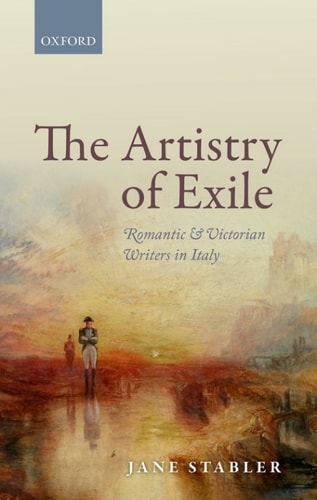
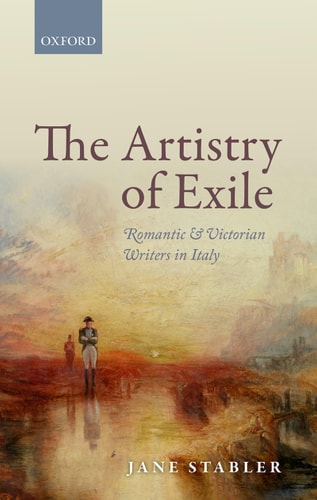
The Artistry of Exile is a new reading of one of the most important themes of nineteenth-century literature. Exile represents a crisis in the always present tension between self and culture, the disturbance of memory, the quest for home, and the survival or not of life's heart quakes -- all of which became identifying features of canonical Romanticism. Focusing on two interlinked groups of writers who, for various reasons, felt cast out of England and sought refuge in Italy, this book traces the material and metaphoric dynamics of distance in poems, novels and epistolary conversations. The book brings into dialogue the self-alienation and existential antagonism of the Cain figure with the contingencies of real travel: conversations about writing desks, lost parcels of books, missing pans and stray camels. Domestic and cosmic perspectives mingle as the book reveals how writers realize the full resonance of Dante's vivid summation of exile in the taste of different bread and the difficulty of another man's stairs. As a country that only exists in the early nineteenth-century as a memory, Italy both embodies and energises formal attempts to bridge the distance created by exile in the work of the Byron-Shelley circle and the later Barrett-Browning- Browning collaboration. Examining these writers in relation to Italian art, sound, religion, narrative art and history, the book presents a new perspective on Romantic canonicity and relocates contemporary ideas of cosmopolitanism in the aesthetic, ethical and political debates of the late Romantic and early Victorian world.
Menrva's Summary
THE THESIS
This book investigates how the experience of exile shaped the aesthetic, ethical, and political frameworks of nineteenth-century Romantic literature. Jane Stabler, a scholar of Romanticism, utilizes a combination of biographical analysis, epistolary evidence, and close readings of canonical texts to argue that the physical displacement of writers to Italy fundamentally altered their creative output. By examining the tension between domestic reality and cosmic metaphor, the author demonstrates how the state of being 'cast out' became a defining characteristic of the era's literary identity.
THE SCOPE MAP
What You Will Find
- Analysis of the Byron-Shelley circle and the Barrett-Browning collaboration.
- Examination of the intersection between material travel constraints and existential alienation.
- Integration of Italian art, religion, and history as catalysts for literary innovation.
- A re-evaluation of Romantic canonicity through the lens of cosmopolitanism.
THE AUTHORITY PERSPECTIVE
Scholars and critics recognize this work as a significant contribution to the study of nineteenth-century literary geography and the influence of displacement on creative production. The text is noted for its ability to balance high-level theoretical discourse with the granular, material realities of the authors' daily lives.
Page Count:
296
Publication Date:
2013-12-17
Publisher:
Oxford University Press
ISBN-10:
0199590249
ISBN-13:
9780199590247
History
Biography
Poetry
Romanticism
Literary Criticism
Nineteenth century
Community Tags
Similar Books