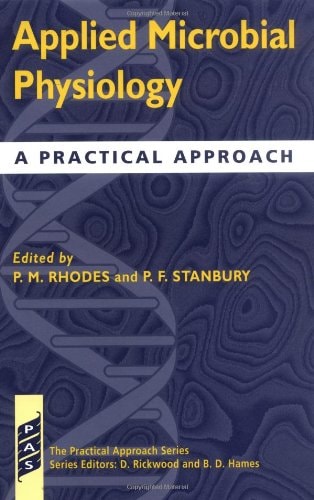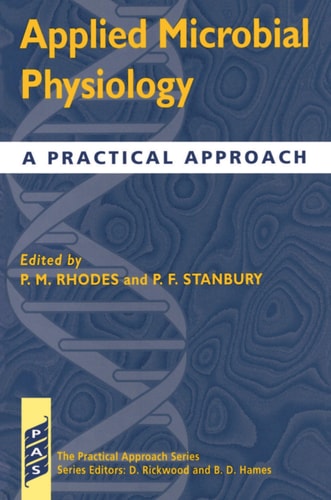
Applied Microbial Physiology: A Practical Approach
0
0
As an Amazon Associate and affiliate partner, Menrva Books earns from qualifying purchases. Learn more
Author Description
In recent years, the rapid growth in biotechnology has led to an upsurge in interest in microbial technology among biochemists, molecular biologists, geneticists, virologists, endocrinologists, and clinicians. Advances in microbial physiology have helped scientists realize a rational approach to optimization of product yield based on analysis of cultures, growth kinetics, and biochemical pathways; its applications also extend to microbiology and biotechnology. This book arises from both the need for practical information to enable the isolation, handling, and culture of organisms, and the necessity to generate and analyze data enabling the development of the process. Chapters cover the "husbandry" of microbiology, the generation of data by chemical and physical analysis, and the interpretation of such data. This is considered from two points of view. On one hand, kinetic analyses of growth and product formation have frequently illuminated the development of fermentation processes. More recently, though, the analysis of the flux of metabolites through intermediate biochemical pathways has shown up important facts in metabolic engineering through the application of molecular biology techniques in microbial physiology. This is a useful resource and guide to the successful culture of microorganisms in pure form, optimizing the culture conditions and the scaling-up process to enable more detailed study.
Menrva's Summary
THE THESIS
This text investigates the methodologies required to optimize microbial culture and product yield through the integration of physiological analysis and metabolic engineering. Stanbury Rhodes provides a comprehensive framework for researchers in biotechnology and molecular biology to bridge the gap between theoretical microbial physiology and practical laboratory application. The book synthesizes kinetic analysis with modern molecular techniques to assist scientists in the isolation, cultivation, and scaling of microbial processes.
THE SCOPE MAP
What You Will Find
- Protocols for the isolation, handling, and maintenance of pure microbial cultures.
- Quantitative methods for kinetic analysis of growth and product formation.
- Techniques for metabolic flux analysis and intermediate biochemical pathway mapping.
- Strategies for process optimization and scaling-up laboratory procedures for industrial application.
THE AUTHORITY PERSPECTIVE
Experts identify this work as a technical resource for those engaged in fermentation and metabolic engineering. Readers frequently note the practical utility of the chapters concerning data generation and the interpretation of physical and chemical analysis in a laboratory setting.
Page Count:
296
Publication Date:
1997-10-09
Publisher:
IRL Press
ISBN-10:
0199635773
ISBN-13:
9780199635771
Science
Microbiology
Biotechnology
Laboratory Manual
Biochemistry
Community Tags
Similar Books