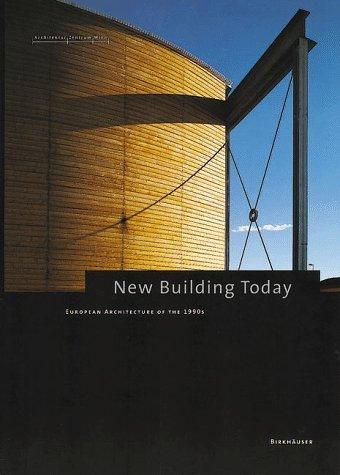
New building today
0
0
As an Amazon Associate and affiliate partner, Menrva Books earns from qualifying purchases. Learn more
Author Description
"There is a new architecture in Europe" was the motto of the first and second Vienna Architecture Congress. With the end of a divided Europe, experts from nearly all countries of this multi-cultured continent convened in 1993 and 1994 to hold discussions on the nature of European architecture in the 1990s. The present volume contains the revised and edited contributions to this congress. Its aim is not to confirm what has already been reported by the media, but rather to draw attention to new tendencies and problems; the formative factors and roots of architecture in Europe; its complexity and heterogeneity, its hopes and achievements as perceived by expert observers from each participating country. Speakers were asked to address but a single question: What are the five best examples of architecture in your country of the last five years? Unsurprisingly, the replies were disparate, in keeping with the uniqueness of each national situation. Europe's new architecture is coming across exactly like its exponents: heterogeneous, multilayered, embarking on discovery and ready for dialogue. But in one feature the examples presented here are alike: all are searching for architectural inspiration which will tie them to the modern classical tradition.
Menrva's Summary
THE THESIS
The book investigates the evolving landscape of European architecture in the post-division era. It presents revised contributions from the Vienna Architecture Congresses of 1993 and 1994, focusing on new tendencies, formative factors, and the complexity of architecture across a multi-cultured continent. The volume highlights the heterogeneity of European architectural expression, with experts from various countries addressing the question of the five best architectural examples from their nations in the preceding five years. A common thread observed is the search for inspiration that connects contemporary works to the modern classical tradition.
THE SCOPE MAP
- Contributions from the Vienna Architecture Congresses of 1993 and 1994
- Analysis of new tendencies and problems in European architecture
- Exploration of formative factors and roots of architecture in Europe
- Examination of the complexity and heterogeneity of the continent's architecture
- Expert perspectives from various European countries on recent architectural achievements
- Identification of architectural inspiration linking to the modern classical tradition
THE AUTHORITY PERSPECTIVE
This volume compiles expert analyses of European architecture in the 1990s, aiming to highlight emerging trends rather than reiterate media reports. The collection showcases the diverse and multilayered nature of architecture across the continent, reflecting the unique situations of each participating country. A consistent theme across the presented examples is a shared pursuit of architectural inspiration rooted in the modern classical tradition. The book's focus on dialogue and discovery positions it as a valuable resource for understanding the continent's architectural discourse.
Page Count:
287
Publication Date:
1995-01-01
ISBN-10:
3764352264
Non-Fiction
Architecture
History
Contemporary Architecture
Community Tags
Similar Books