The Invention of Improvement
0
0
As an Amazon Associate and affiliate partner, Menrva Books earns from qualifying purchases. Learn more
Author Description
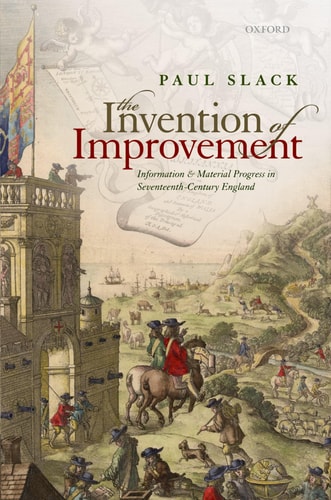
Improvement was a new concept in seventeenth-century England; only then did it become usual for people to think that the most effective way to change things for the better was not a revolution or a return to the past, but the persistent application of human ingenuity to the challenge of increasing the country's wealth and general wellbeing. Improvements in agriculture and industry, commerce and social welfare, would bring infinite prosperity and happiness. The word improvement was itself a recent coinage. It was useful as a slogan summarising all these goals, and since it had no equivalent in other languages, it gave the English a distinctive culture of improvement that they took with them to Ireland and Scotland, and to their possessions overseas. It made them different from everyone else.The Invention of Improvement explains how this culture of improvement came about. Paul Slack explores the political and economic circumstances which allowed notions of improvement to take root, and the changes in habits of mind which improvement accelerated. It encouraged innovation, industriousness, and the acquisition of consumer goods which delivered comfort and pleasure. There was a new appreciation of material progress as a process that could be measured, and its impact was publicised by the circulation of information about it. It had made the country richer and many of its citizens more prosperous, if not always happier. Drawing on a rich variety of contemporary literature, The Invention of Improvement situates improvement at the centre of momentous changes in how people thought and behaved, how they conceived of their environment and their collective prospects, and how they cooperated in order to change them.
Menrva's Summary
THE THESIS
How did the concept of 'improvement' emerge as a defining cultural and economic force in seventeenth-century England? Paul Slack, a distinguished historian of early modern England, examines the shift in mindset that prioritized human ingenuity and material progress over traditionalist or revolutionary approaches to societal change. By analyzing contemporary literature and economic records, the author argues that this unique English preoccupation with improvement fostered a culture of innovation and consumerism that fundamentally altered the nation's trajectory and its colonial expansion.
THE SCOPE MAP
What You Will Find
- Analysis of the seventeenth-century English economic and political landscape.
- Examination of the linguistic and conceptual origins of the term 'improvement'.
- Case studies on advancements in agriculture, industry, and social welfare.
- Discussion of how the culture of improvement influenced British colonial activities in Ireland, Scotland, and overseas.
THE AUTHORITY PERSPECTIVE
Historians recognize this work as a significant contribution to the study of early modern English mentalities and economic development. Scholars frequently note the author's meticulous use of primary sources to map the transition toward a modern, progress-oriented society.
Page Count:
1200
Publication Date:
2019-06-11
Publisher:
Oxford University Press
ISBN-10:
0199645914
ISBN-13:
9780199645916
History
Cultural History
Inventions
Economic History
Great Britain
British History
Social History
Community Tags
Similar Books