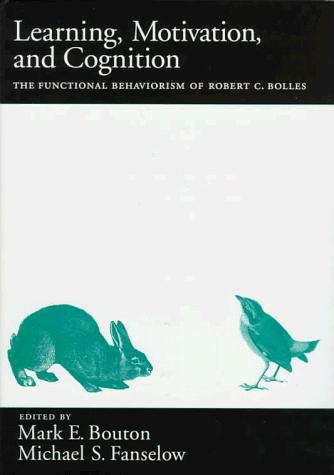
Learning, Motivation, and Cognition
0
0
As an Amazon Associate and affiliate partner, Menrva Books earns from qualifying purchases. Learn more
Author Description
The Past Half-Century has seen a dramatic shift in the biobehavioral study of learning and motivation. Fifty years ago, theory was dominated by mechanistic ideas about drive, reinforcement, and temporal contiguity. Now ethological and cognitive themes have become part of the lexicon. Robert C. Bolles, PhD, whose classic book Theory of Motivation marked the downfall of Hullian drive theory, was at the forefront of this emerging school of thought, advocating a new blend of psychology and ethology. He helped shape the era, fostering interest in radical empiricism, adaptive function, a strong infusion of biology, and a focus on the purposiveness of goal-oriented behavior. This volume reflects his influential scholarship and shares the same themes that guided his thinking: behavior and function. In Learning, Motivation, and Cognition, Bolles's former students, contemporaries, and colleagues continue his legacy in writing upon these themes. The volume begins with a section on evolution, ontogeny, and phylogeny that emphasizes the functional aspects of behavior. Bolles's first research topic was how motivations for commodities such as food and water affect behavior, and the second section describes this intimate interaction of learning with regulatory physiology. Later in his career, Bolles turned to the question of how past behavioral experience guides an animal's selection between various foods. Learned food preferences and aversions are the subject of the third section. Next, the book pays tribute to Bolles's work on the problems of aversively motivated behavior. The final section of the book addresses cognitive processes in animal learning.
Menrva's Summary
THE THESIS
This volume explores the evolution of the study of learning and motivation, tracing the shift from mechanistic theories to contemporary ethological and cognitive approaches. It reflects the influential scholarship of Robert C. Bolles, a key figure in advocating for a blend of psychology and ethology, emphasizing radical empiricism, adaptive function, biology, and the purposiveness of goal-oriented behavior. The book is structured around Bolles's guiding themes of behavior and function, with contributions from his former students, contemporaries, and colleagues. It examines the functional aspects of behavior, the interaction of learning with regulatory physiology, learned food preferences and aversions, aversively motivated behavior, and cognitive processes in animal learning.
THE SCOPE MAP
- Evolution, ontogeny, and phylogeny emphasizing functional aspects of behavior.
- The interaction of learning with regulatory physiology, focusing on motivations for food and water.
- Learned food preferences and aversions, guided by past behavioral experience.
- Analysis of aversively motivated behavior, paying tribute to Bolles's work.
- Exploration of cognitive processes in animal learning.
THE AUTHORITY PERSPECTIVE
This collection of essays honors the legacy of Robert C. Bolles, a significant figure in the study of learning and motivation. The contributions from his peers and former students highlight the enduring relevance of his work on behavior and function. The volume is structured to reflect the progression of thought in the field, from early mechanistic theories to more contemporary ethological and cognitive perspectives. It offers a comprehensive look at key areas such as evolution, regulatory physiology, learned behaviors, and cognition in animals.
Page Count:
451
Publication Date:
1997-01-01
ISBN-10:
1557984360
ISBN-13:
9781557984364
Psychology
Non-Fiction
Science
Motivation
Cognition
Behavioral Science
Learning Theory
Community Tags
Similar Books