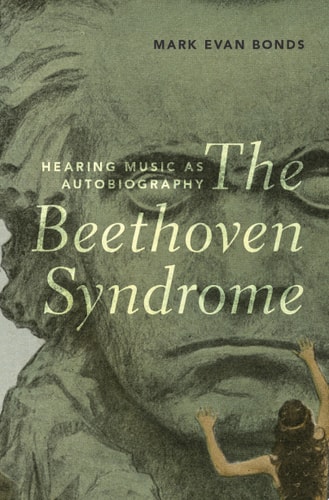
Beethoven Syndrome: Hearing Music as Autobiography
0
0
As an Amazon Associate and affiliate partner, Menrva Books earns from qualifying purchases. Learn more
Author Description
The 'beethoven Syndrome' Is The Inclination Of Listeners To Hear Music As The Projection Of A Composer's Inner Self. This Was A Radically New Way Of Listening That Emerged After Beethoven's Death. Beethoven's Music Was A Catalyst For This Change, But Only In Retrospect, For It Was Not Until After His Death That Listeners Began To Hear Composers--and Not Just Beethoven--in Their Works, Particularly In Their Instrumental Music. The Beethoven Syndrome: Hearing Music As Autobiography Traces The Rise, Fall, And Persistence Of This Mode Of Listening From The Middle Of The Eighteenth Century To The Present. Prior To 1830, Composers And Audiences Alike Operated Within A Framework Of Rhetoric In Which The Burden Of Intelligibility Lay Squarely On The Composer, Whose Task It Was To Move Listeners In A Calculated Way. But Through A Confluence Of Musical, Philosophical, Social, And Economic Changes, The Paradigm Of Expressive Objectivity Gave Way To One Of Subjectivity In The Years Around 1830. The Framework Of Rhetoric Thus Yielded To A Framework Of Hermeneutics: Concert-goers No Longer Perceived Composers As Orators But As Oracles To Be Deciphered. In The Wake Of World War I, However, The Aesthetics Of 'new Objectivity' Marked A Return Not Only To Certain Stylistic Features Of Eighteenth-century Music But Also To The Earlier Concept Of Expression Itself. Objectivity Would Become The Cornerstone Of The High Modernist Aesthetic That Dominated The Century's Middle Decades. Masterfully Citing A Broad Array Of Source Material From Composers, Critics, Theorists, And Philosophers, Mark Evan Bonds's Engaging Study Reveals How Perceptions Of Subjective Expression Have Endured, Leading To The Present Era Of Mixed And Often Conflicting Paradigms Of Listening--dust Jacket Flap.
Menrva's Summary
THE THESIS
This book investigates the historical shift in how listeners perceive instrumental music as a direct reflection of a composer's personal life and inner self. Mark Evan Bonds, a scholar of musicology, utilizes a wide range of primary sources—including critical essays, philosophical treatises, and composer correspondence—to argue that the 'Beethoven Syndrome' represents a fundamental change in the Western listening paradigm. He demonstrates how the transition from a rhetorical framework to a hermeneutic one redefined the relationship between the creator and the audience.
THE SCOPE MAP
What You Will Find
- A historical analysis of listening habits from the mid-eighteenth century to the present.
- The transition from the 'rhetorical' model of music to the 'hermeneutic' model around 1830.
- An examination of the 'New Objectivity' movement following World War I.
- Analysis of how the concept of the composer as an 'oracle' emerged and persisted.
Scope Limits
- The text focuses primarily on Western art music traditions.
- It does not provide a comprehensive biography of Beethoven himself, but rather focuses on the reception of his work.
THE AUTHORITY PERSPECTIVE
Scholars and music historians frequently cite this work as a significant contribution to the study of musical reception and aesthetics. Readers often note the academic rigor of the prose, which provides a clear framework for understanding how cultural shifts influence the act of listening.
Page Count:
0
Publication Date:
2020-01-01
Publisher:
New York, NY : Oxford University Press,
ISBN-10:
0190068507
ISBN-13:
9780190068509
History
PHILOSOPHY Aesthetics
Aesthetics
Music History
Appreciation
Musicology
Music Philosophy
Community Tags
Similar Books