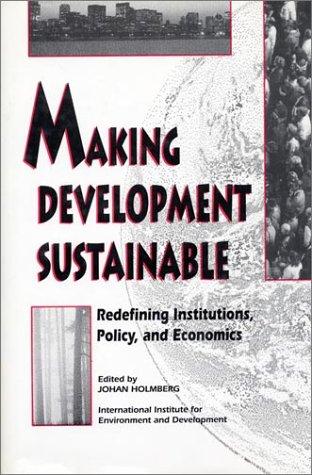
Making Development Sustainable
0
0
As an Amazon Associate and affiliate partner, Menrva Books earns from qualifying purchases. Learn more
Author Description
Although the idea of sustainable development is by now well established, discussions of how to progress from concept to reality often become mired in the complexities of global politics and offer few concrete solutions. While achieving sustainable development will undoubtedly require changes at the global level, the authors of this book emphasize that patterns of sustainable development must be built from the bottom up. They focus on methods for movement toward sustainability that can occur at the grassroots level. This book presents an integrated series of essays on the policies for sustainable development from one of the leading policy research institutes for environmental and developmental issues. It concentrates on the developing world and looks at the specific sectors to which policies must be applied. Beginning with a discussion of what constitutes sustainable development, it goes on to examine the institutional measures needed to mobilize human resources for change and the economic policies for sustainable natural-resource management. It then considers the policies needed in agriculture, urban development, industry, forests, drylands, energy use, finance, population, and consumption. The book ends with a discussion of the potential for financing new policy initiatives and the pressing need to reduce population growth and profligate consumption. Throughout, it demonstrates how those directly involved are best suited to manage their environments and resources. Policies for sustainable development depend upon the experience and resourcefulness of local people and require that they control their own futures.
Menrva's Summary
THE THESIS
This book argues that sustainable development must be built from the ground up, emphasizing grassroots solutions over complex global politics. The authors, from a leading policy research institute, focus on practical methods for achieving sustainability in the developing world. They explore the necessary institutional measures, economic policies for natural resource management, and sector-specific policies for agriculture, industry, energy, and more. The core argument is that local people, directly involved in managing their environments and resources, are best positioned to control their own futures and drive sustainable development.
THE SCOPE MAP
- What constitutes sustainable development
- Institutional measures for mobilizing human resources
- Economic policies for sustainable natural-resource management
- Policies for agriculture
- Policies for urban development
- Policies for industry
- Policies for forests and drylands
- Policies for energy use, finance, population, and consumption
THE AUTHORITY PERSPECTIVE
This book offers a pragmatic approach to sustainable development, focusing on actionable policies for the developing world. It is likely to be of interest to policymakers, researchers, and practitioners engaged in environmental and developmental issues. The emphasis on grassroots involvement and local resource management suggests a framework that values community experience and self-determination. The comprehensive coverage of various sectors indicates a thorough examination of the multifaceted challenges in achieving sustainability.
Page Count:
362
Publication Date:
1992-01-01
ISBN-10:
1559632135
Politics
Economics
Non-Fiction
Developing Nations
Community Tags
Similar Books