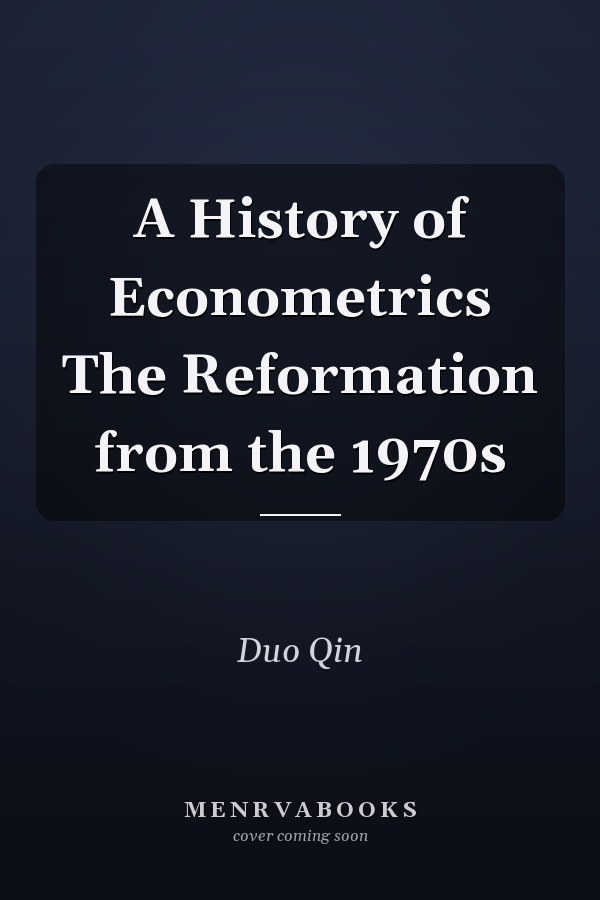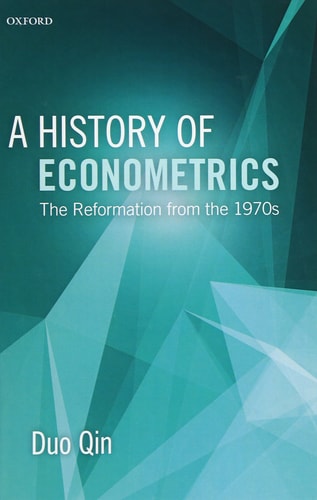
A History of Econometrics: The Reformation from the 1970s
0
0
As an Amazon Associate and affiliate partner, Menrva Books earns from qualifying purchases. Learn more
Author Description
Reformation of Econometrics is a sequel to The Formation of Econometrics: A Historical Perspective (1993, OUP) which traces the formation of econometric theory during the period 1930-1960. This book provides an account of the advances in the field of econometrics since the 1970s. Based on original research, it focuses on the reformists' movement and schools of thought and practices that attempted a paradigm shift in econometrics in the 1970s and 1980s.It describes the formation and consolidation of the Cowles Commission (CC) paradigm and traces and analyses the three major methodological attempts to resolve problems involved in model choice and specification of the CC paradigm. These attempts have reoriented the focus of econometric research from internal questions (how to optimally estimate a priori given structural parameters) to external questions (how to choose, design, and specify models). It also examines various modelling issues and problems through two case studies - modelling the Phillips curve and business cycles. The third part of the book delves into the development of three key aspects of model specification in detail - structural parameters, error terms, and model selection and design procedures. The final chapter uses citation analyses to study the impact of the CC paradigm over the span of three and half decades (1970-2005). The citation statistics show that the impact has remained extensive and relatively strong in spite of certain weakening signs. It implies that the reformative attempts have fallen short of causing a paradigm shift.
Menrva's Summary
THE THESIS
This book investigates whether the reformist movements of the 1970s and 1980s successfully achieved a paradigm shift within the field of econometrics. Duo Qin, an established researcher in the history of economic thought, utilizes original research and citation analysis to evaluate the dominance of the Cowles Commission paradigm. The text argues that while significant methodological attempts were made to reorient econometric research toward model specification and design, the foundational influence of the original paradigm has remained largely intact through the early 21st century.
THE SCOPE MAP
What You Will Find
- Historical analysis of econometric theory development from the 1970s through 2005.
- Examination of the Cowles Commission paradigm and its consolidation within the field.
- Case studies focusing on the modeling of the Phillips curve and business cycles.
- Quantitative citation statistics used to measure the long-term impact of reformist schools of thought.
THE AUTHORITY PERSPECTIVE
Experts recognize this work as a critical sequel that provides necessary historical context for modern econometric practices. Readers frequently note the academic density of the prose, which serves as a rigorous resource for students and scholars of economic methodology.
Page Count:
248
Publication Date:
2013-09-15
Publisher:
Oxford University Press
ISBN-10:
0199679347
ISBN-13:
9780199679348
Economics
Econometrics
Methodology
Community Tags
Similar Books