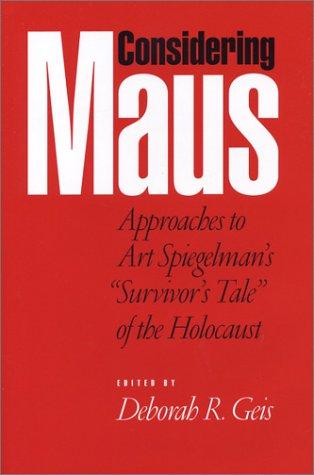
Considering Maus
0
0
As an Amazon Associate and affiliate partner, Menrva Books earns from qualifying purchases. Learn more
Author Description
"In 1992, Art Spiegelman's two-volume illustrated novel Maus: A Survivor's Tale was awarded a special-category Pulitzer Prize. In it, Spiegelman tells the gripping story of his father's experiences in the Holocaust. The book portrays the trials Spiegelman's father endured as a Jewish refugee in the ghettos and concentration camps of Poland during World War II, his difficulties assimilating to American life following his immigration to New York, and the author's own troubled sense of self as he grapples with his father's history." "Ten scholars explore many aspects of the pivotal work, including Spiegelman's use of animal characters, the influence of other "comix" artists, the role of the mother and its relation to gender issues, the use of repeating images such as smoke and blood, Maus's place among Holocaust testimonials, its appropriation of cinematic technique, its use of language and styles of dialect, and the implications of the work's critical and commercial success."--Jacket.
Menrva's Summary
THE THESIS
This book examines the multifaceted impact and critical reception of Art Spiegelman's seminal graphic novel, Maus. The collection features ten scholars who dissect various elements of Spiegelman's work, from its unique artistic choices like the use of animal characters and recurring motifs of smoke and blood, to its thematic depth concerning the Holocaust, post-war assimilation, and intergenerational trauma. The essays explore its place within Holocaust testimonials, its narrative techniques, and its significant critical and commercial success, offering a comprehensive scholarly analysis of this pivotal work.
THE SCOPE MAP
- Analysis of Art Spiegelman's use of animal characters to represent different ethnic groups.
- Exploration of the influence of other "comix" artists on Spiegelman's style.
- Discussion of the role of the mother figure and its relation to gender issues within the narrative.
- Examination of recurring visual motifs such as smoke and blood.
- Contextualization of Maus among other Holocaust testimonials and survivor narratives.
- Appreciation of Spiegelman's appropriation of cinematic techniques in the graphic novel format.
- Study of the use of language, including dialect and translation.
- Consideration of the implications of Maus's critical and commercial success, including its Pulitzer Prize.
THE AUTHORITY PERSPECTIVE
The scholarly essays in 'Considering Maus' offer a deep dive into the complexities of Art Spiegelman's graphic novel, exploring its artistic innovations and thematic resonance. The collection highlights the book's significant place in Holocaust literature and graphic narrative, examining its critical reception and cultural impact. Scholars engage with its unique visual language, narrative structure, and the profound intergenerational dialogue it fosters. This work provides a robust academic framework for understanding the enduring power and importance of Maus.
Page Count:
192
Publication Date:
2003-01-01
ISBN-10:
0817313761
Non-Fiction
Biography
Graphic Novels
Literary Criticism
Jewish Studies
Community Tags
Similar Books