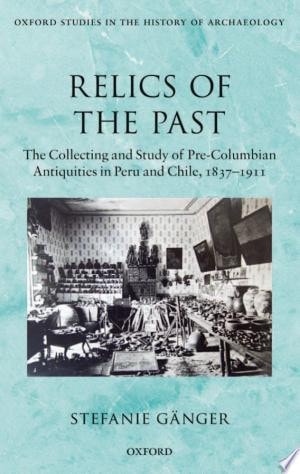
Relics of the Past: The Collecting and Studying of Pre-Columbian Antiquities in Peru and Chile, 1837-1911
0
0
As an Amazon Associate and affiliate partner, Menrva Books earns from qualifying purchases. Learn more
Author Description
Relics of the Past tells the story of antiquities collecting, antiquarianism, and archaeology in Cuzco and Lima over the Araucanian territories and the War of the Pacific in the second half of the nineteenth and the early twentieth century. While the role of foreign travellers and scholars dedicated to the study of South America's pre-Columbian past is well documented, historians have largely overlooked the knowledge gathered and the collections formed among collectors of antiquities, antiquaries, and archaeologists born or living in South America during this period.The landed gentry, the clergy, and an urban bourgeoisie of doctors, engineers, and military officials put antiquities on display in their private mansions or bestowed them upon the public museums that were being formed by municipalities and governments in Santiago de Chile, Cuzco, or Lima. Men, and some few women, gathered antiquities on their journeys 'inland' and during sociable weekend excursions, but also on quotidian commercial voyages or in military campaigns. They bartered antiquities with their fellow collectors or haggled about their price on the antiquities market. In their hours of leisure, they marvelled at them, wrote about them, and disputed over their meaning, age, and interest in learned societies, informal gatherings, and at meetings in universities and public museums. This volume unveils a hitherto largely unknown world of antiquarian and archaeological collecting and learning in Peru and Chile.
Menrva's Summary
THE THESIS
This volume investigates the development of antiquarianism and archaeological practice in Peru and Chile between 1837 and 1911, specifically focusing on the contributions of local collectors rather than foreign scholars. Stefanie Gänger, a historian specializing in the history of knowledge and archaeology, utilizes archival records and private correspondence to reconstruct the social landscape of 19th-century South American antiquities collecting. The book argues that the formation of archaeological knowledge was a deeply social process driven by the local urban bourgeoisie, clergy, and landed gentry who integrated these artifacts into their private and public lives.
THE SCOPE MAP
What You Will Find
- A detailed historical analysis of collecting practices in Cuzco, Lima, and Santiago de Chile from 1837 to 1911.
- Examination of the social demographics of collectors, including the urban bourgeoisie, military officials, and the clergy.
- Evidence drawn from private collections, museum records, and the correspondence of local antiquaries.
- Analysis of the intersection between political instability, such as the War of the Pacific, and the preservation of cultural heritage.
THE AUTHORITY PERSPECTIVE
Scholars recognize this work as a significant contribution to the historiography of South American archaeology, particularly for its focus on local agency. Readers frequently note the academic density of the prose and the depth of the archival research presented throughout the text.
Page Count:
328
Publication Date:
2014-07-29
Publisher:
Oxford University Press
ISBN-10:
0199687692
ISBN-13:
9780199687695
History
Cultural History
Archaeology
Academic
Community Tags
Similar Books