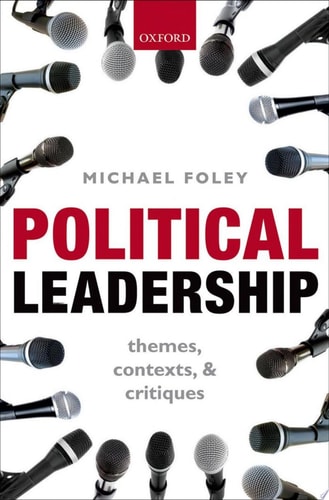
Political Leadership: Themes, Contexts, and Critiques
0
0
As an Amazon Associate and affiliate partner, Menrva Books earns from qualifying purchases. Learn more
Author Description
Despite its recognized significance in social life, leadership is a notoriously elusive subject that generates a host of different points of explanatory focus. This is particularly so in the field of political leadership, which has been afflicted by an enduring split between the biographical idiosyncrasies of individual leaders and the specialist contributions from an array of social science disciplines. This new study is designed to establish an improved balance between this often myopic and confusing bifurcation of approaches. It engages with an expansive range of empirical, theoretical, and interpretive research into the issue of leadership but does so in a way that ensures that the political character of the subject is kept securely in the foreground. The project is therefore designed to maintain a clear emphasis upon leaders embedded in their political contexts and viscerally connected to high level issues of political location and status, political power and legitimacy, and political functions and contingencies.The book has a cumulative design that moves from an in-depth analysis of the basic components of political leadership to an examination of a series of key dimensions relating to leadership activity and development--namely the themes of representation, communication, marketing, business practice, and the issue of women leaders. It goes on to survey the developmental properties of the international sphere before concluding with a substantive review of the changing landscapes of contemporary leadership activity and the different ways that we come to terms with the theme of political leadership in an increasingly complex world.
Menrva's Summary
THE THESIS
This study investigates how to reconcile the fragmented academic approaches to political leadership by centering the political context and institutional constraints of the individual leader. Michael W. Foley addresses the historical divide between biographical accounts of leaders and the abstract models provided by social science disciplines. By synthesizing empirical, theoretical, and interpretive research, the author constructs a framework that prioritizes the political environment, power dynamics, and legitimacy of leadership roles. The text argues for a holistic understanding of leadership that remains tethered to the functional realities of political status and contingency.
THE SCOPE MAP
What You Will Find
- Analysis of foundational components of political leadership including power, legitimacy, and political location.
- Examination of key activity dimensions such as representation, communication, and political marketing.
- Discussion of modern leadership challenges including business practice integration and the role of women in political spheres.
- A survey of developmental properties within the international political landscape.
THE AUTHORITY PERSPECTIVE
Experts recognize this work as a comprehensive attempt to bridge the gap between individual-focused biography and structural political science. Readers frequently note the academic density of the prose, which serves as a foundational text for students and researchers seeking to navigate the complexities of contemporary political leadership.
Page Count:
448
Publication Date:
2014-01-14
Publisher:
Oxford University Press
ISBN-10:
0199685932
ISBN-13:
9780199685936
Sociology
Political Leadership
Government
Leadership
Political Theory
Community Tags
Similar Books