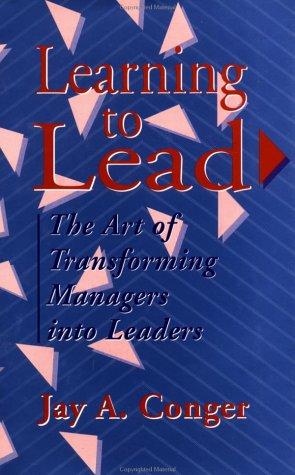
Learning to Lead
0
0
As an Amazon Associate and affiliate partner, Menrva Books earns from qualifying purchases. Learn more
Author Description
In Learning to Lead, Jay Conger shares his undercover experiences in five of the nation's most popular leadership programs to offer readers personal insights into the role training plays in leadership development. Using a diary format supported by workshop outlines, sample materials, and interviews with one hundred fellow participants, he assesses the strengths and weaknesses of four key approaches to leadership development: personal growth, conceptual analysis, feedback, and skill development. Conger summarizes the goals and methods of each program and reveals the results participants can expect from"ARC's VisionQuest and Pecos River: Does personal growth play a role in strong leadership?" "The Tom Peters Group's Leadership Challenge: Can a conceptual understanding of leadership help managers improve their technique?" "The Center for Creative Leadership's Leadership Development Program: Can feedback tools like Myers-Briggs help participants transform their leadership weaknesses into strengths?" "The Forum Corporation's Leadership Course: Can skill-building techniques be used to teach complex leadership skills - such as strategic vision and change management?"--Jacket.
Menrva's Summary
THE THESIS
This book investigates the effectiveness of various leadership training programs by examining their methodologies and outcomes. Jay Conger, drawing on his undercover experiences in five prominent leadership development programs, provides an in-depth analysis of four key approaches: personal growth, conceptual analysis, feedback, and skill development. Through a diary format, supported by workshop outlines, sample materials, and interviews with numerous participants, Conger critically assesses the strengths and weaknesses inherent in each training model. The book aims to reveal the tangible results participants can expect from these diverse leadership development strategies.
THE SCOPE MAP
- Analysis of personal growth approaches to leadership development, exemplified by ARC's VisionQuest and Pecos River.
- Examination of conceptual analysis in leadership training, using The Tom Peters Group's Leadership Challenge.
- Evaluation of feedback tools and their role in transforming leadership weaknesses, as seen in the Center for Creative Leadership's program.
- Assessment of skill-building techniques for complex leadership skills like strategic vision and change management, as taught in The Forum Corporation's course.
- Insights from interviews with one hundred fellow participants across the analyzed programs.
- Inclusion of workshop outlines and sample materials from the featured leadership programs.
THE AUTHORITY PERSPECTIVE
The book is structured to provide a practical, evidence-based review of leadership training methodologies. Its approach, grounded in direct participant experience and detailed program analysis, suggests it offers valuable insights for both individuals seeking development and organizations designing training initiatives. The inclusion of specific program details and participant feedback indicates a focus on actionable takeaways rather than purely theoretical discussions. This format likely appeals to those looking for a critical, yet comprehensive, overview of contemporary leadership development practices.
Page Count:
234
Publication Date:
1992-01-01
ISBN-10:
1555424740
ISBN-13:
9781555424749
Personal Development
Business
Self-help
Non-Fiction
Leadership
Community Tags
Similar Books