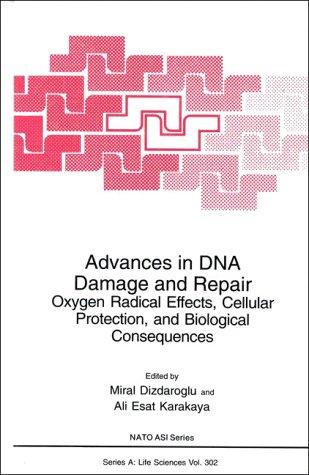
Advances in DNA Damage and Repair
0
0
As an Amazon Associate and affiliate partner, Menrva Books earns from qualifying purchases. Learn more
Author Description
Damage to DNA by both exogenous and endogenous sources is increasingly regarded as highly important in the initiation and progression of cancer and in the occurance of other pathological events. DNA damage caused by reactive oxygen-derived species, also called oxidative DNA damage, is most the frequent type encountered by aerobic cells. Mechanistic studies of carcinogenesis indicate an important role of this type of damage to DNA. There is also strong evidence to support the role of oxidative DNA damage in the aging process. DNA damage is opposed in vivo by repair systems. If not repaired, DNA damage may lead to detrimental biological consequences. Therefore, the repair of DNA damage is regarded as one of the essential events in all life forms. In recent years the field of DNA repair has flourished due to new findings on DNA repair mechanisms and the molecular basis of cancer. A detailed knowledge of mechanisms of DNA damage and repair, and how individual repair enzymes function may lead to manipulation of DNA repair in cells and ultimately to an increase of the resistence of human cells to DNA-damaging agents. This volume covers the most recent devlopments in this research field and contains contributions from scientists working in the fields of biochemistry, molecular biology, enzymology, biomedical science, and radiation biology.
Menrva's Summary
THE THESIS
DNA damage and its repair are critical to understanding cancer and aging. This volume explores the latest advancements in the field of DNA damage and repair, a crucial area of research given the role of DNA damage in cancer initiation and progression, as well as other pathological events. Oxidative DNA damage, caused by reactive oxygen species, is identified as the most frequent type encountered by aerobic cells and is strongly implicated in both carcinogenesis and the aging process. The book details how in vivo repair systems counteract this damage, emphasizing that unrepaired DNA damage can lead to severe biological consequences, making DNA repair an essential event for all life forms. Recent breakthroughs in understanding DNA repair mechanisms and their molecular basis, particularly in relation to cancer, have significantly advanced the field.
THE SCOPE MAP
- Recent developments in the study of DNA damage and repair mechanisms.
- The role of oxidative DNA damage in cancer and aging.
- The function of DNA repair systems in vivo.
- Molecular basis of DNA repair and its connection to cancer.
- Contributions from experts in biochemistry, molecular biology, enzymology, biomedical science, and radiation biology.
THE AUTHORITY PERSPECTIVE
The subject matter indicates a dense, technical compilation of recent research, likely aimed at specialists in biochemistry, molecular biology, and related fields. The focus on cancer and aging suggests a strong emphasis on the pathological implications of DNA damage and the efficacy of repair mechanisms. The collection of contributions from various scientific disciplines points to a comprehensive overview of the current state of knowledge in DNA damage and repair research.
Page Count:
511
Publication Date:
1999-01-01
ISBN-10:
0306460424
Science
Non-Fiction
Biochemistry
Aging
Cancer Research
Community Tags
Similar Books