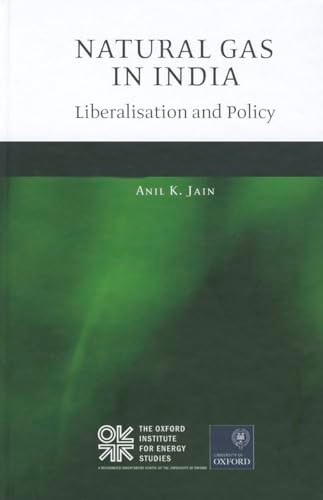
Natural Gas in India: Liberalisation and Policy
0
0
As an Amazon Associate and affiliate partner, Menrva Books earns from qualifying purchases. Learn more
Author Description
India's energy consumption pattern is in transition. The share of gas in the primary commercial energy mix is likely to rise from its current level of 8 % to 20 % by 2024-25. Large gas discoveries in the eastern offshore basin, which came into production in 2009, have doubled domestic supply. However, national gas policies, which were formulated during an era of shortages, have only recently begun to readjust to the emergence of gas as a potential competing fuel in India's energy basket. The Indian gas sector has often been viewed by international observers as an uncertain environment full of policy detail. In light of recent policy changes aimed at cultivating a market-oriented form of functioning, there is a real need for understanding the dynamics of policymaking in the sector. This book suggests that there is a 'bigger story' in the Indian gas sector, and attempts to guide the reader through the reasoning behind its policy construct. The book is organised in two parts; the first part sets out the factual basis for a policy discussion, through an incisive analysis of supply options, and of three major demand assessments for gas. It concludes that the market for Indian gas has failed to develop despite the fact that conditions for a market exist. The second part investigates the reasons for this failure through scrutiny of major government policies. It sets out how there are seemingly conflicting aims in the government's 'Gas Utilisation Policy', and investigates the set of policy tools that have been adopted to reconcile these aims, thus demystifying much of the complex policy matter on Indian gas. The analysis then goes further into the investigation of the main variables which shape the potential future of the Indian gas market, through a study of gas pricing. The conclusions draw out a set of suggestions on potential issues which require resolution or further analyses, in order for gas to fulfil its potential role in India's economic progress.
Menrva's Summary
THE THESIS
This book investigates the structural and policy-driven barriers that have prevented the Indian natural gas market from reaching its full potential despite favorable supply conditions. Anil K. Jain, an expert in the Indian energy sector, utilizes a combination of historical policy analysis, supply-demand modeling, and institutional scrutiny to explain the complexities of the nation's energy transition. The work argues that while the potential for gas as a primary fuel source is significant, the legacy of shortage-era policies continues to impede market-oriented development.
THE SCOPE MAP
What You Will Find
- Analysis of domestic supply options and major demand assessments for natural gas in India.
- Scrutiny of the government's Gas Utilisation Policy and its conflicting regulatory aims.
- Investigation into the variables shaping future market potential, specifically gas pricing mechanisms.
- A framework for understanding the reasoning behind Indian energy policy constructs.
THE AUTHORITY PERSPECTIVE
Experts and policy analysts recognize this text as a foundational resource for navigating the complexities of the Indian energy sector. Readers frequently note the technical density of the prose, which provides a rigorous examination of the regulatory environment for those involved in energy economics and public policy.
Page Count:
256
Publication Date:
2012-05-16
Publisher:
Oxford Institute for Energy Studies
ISBN-10:
0199697388
ISBN-13:
9780199697380
Business
Economics
Energy
Public Policy
India
Natural Gas
Community Tags
Similar Books