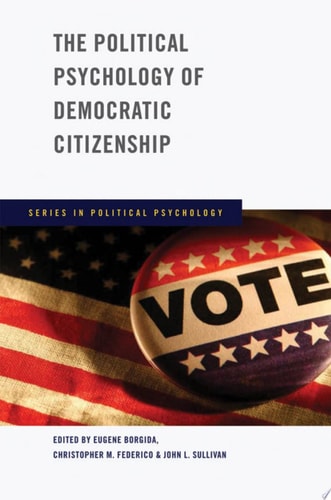
Political Psychology of Democratic Citizenship
0
0
As an Amazon Associate and affiliate partner, Menrva Books earns from qualifying purchases. Learn more
Author Description
While Scholars In Political Science, Social Psychology, And Mass Communications Have Made Notable Contributions To Understanding Democratic Citizenship, They Concentrate On Very Different Dimensions Of Citizenship. The Current Volume Challenges This Fragmentary Pattern Of Inquiry, And Adopts An Interdisciplinary Approach To The Analysis Of Citizenship That Offers New Insights And Integrates Previously Disparate Research Agendas. It Also Suggests The Possibility Of Informed Interventions Aimed At Meeting New Challenges Faced By Citizens In Modern Democracies. The Volume Is Organized Around Five Themes Related To Democratic Citizenship: Citizen Knowledge About Politics; Persuasion Processes And Intervention Processes; Group Identity And Perception Of Individual Citizens And Social Groups; Hate Crimes And Intolerance; And The Challenge Of Rapid Changes In Technology And Mass Media. These Themes Address The Key Challenges To Existing Perspectives On Citizenship, Represent Themes That Are Central To The Health Of Democratic Societies, And Reflect Ongoing Lines Of Research That Offer Important Contributions To An Interdisciplinary Political Psychology Perspective On Citizenship. In Several Cases, Scholars May Be Unaware Of Work In Other Disciplines On The Same Topic And Might Well Benefit From Greater Intellectual Commerce. These Themes Provide Excellent Opportunities For The Interdisciplinary Cross-talk That Characterizes The Contributions To This Volume By Prominent Scholars From Psychology, Political Science, Sociology, And Mass Communications. In The Final Section, Distinguished Commentators Reflect On Different Aspects Of The Scholarly Agenda Put Forth In This Volume, Including What This Body Of Work Suggests About The State Of Political Psychology's Contributions To Our Understanding Of These Issues. Thus This Volume Aims To Provide A Multifaceted, Interdisciplinary Look At The Political Psychology Of Democratic Citizenship. The Interdisciplinary Bent Of Contemporar
Menrva's Summary
THE THESIS
This volume investigates the fragmented nature of research regarding democratic citizenship by proposing an interdisciplinary framework that integrates political science, social psychology, and mass communications. The editors, Christopher M. Federico, Eugene Borgida, and John L. Sullivan, curate contributions from prominent scholars to bridge the gap between disparate academic silos. By synthesizing these fields, the authors argue that a unified political psychology perspective is necessary to address the complex challenges facing modern democratic societies.
THE SCOPE MAP
What You Will Find
- Analysis of citizen knowledge regarding political systems and processes.
- Examination of persuasion techniques and intervention strategies in public discourse.
- Study of group identity, social perception, and the psychological roots of intolerance and hate crimes.
- Evaluation of the impact of rapid technological advancement and mass media on democratic engagement.
THE AUTHORITY PERSPECTIVE
Experts identify this volume as a foundational text for those seeking to understand the intersection of behavioral science and political theory. Readers frequently note the academic density of the prose, which serves as a comprehensive resource for scholars and advanced students in the social sciences.
Page Count:
401
Publication Date:
2009-01-01
Publisher:
Oxford University Press
ISBN-10:
0199714886
ISBN-13:
9780199714889
Psychology
Sociology
Citizenship
Democratic Theory
United States
Communication
Community Tags
Similar Books











Reader Comments
Share Your Thoughts
No comments yet. Be the first to share your thoughts!