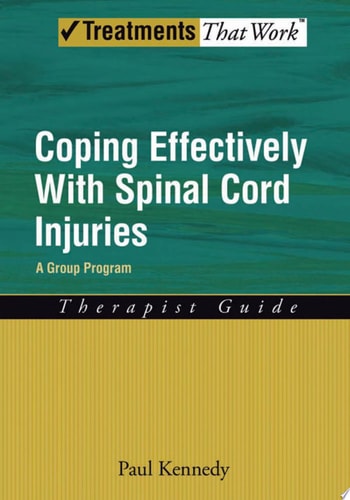
Coping Effectively With Spinal Cord Injuries: A Group Program Therapist Guide
Author Description
For individuals who have suffered a spinal cord injury, it is a struggle to know how to assess and cope with such a life-changing event. The coping strategies that a person employs can have an enormous impact on their mental well-being and long-term health. Approach focused coping, in which the individual accepts and seeks to understand their condition, results in a sense of mastery, self-efficacy, and post traumatic growth. Conversely, avoidance focused coping can lead to anxiety, depression, self neglect, and substance abuse problems. Approximately 50% will meet the diagnostic criteria for depression at 6 months post injury. Research shows that those with depression will have a poorer outcome and shorter life-span. Coping effectiveness training (CET) aims to improve skills for assessing stress, teaching a range of coping skills that can be used to tackle stress, and provide an opportunity for interaction with others who have similar experiences of spinal cord injury. CET includes the identification of effective and ineffective responses to stress, especially those that are particularly unhelpful, such as disengagement, general avoidance, long term denial, and the expression of extreme emotion. By encouraging individuals to think critically about their behaviour in response to stressors, CET helps people avoid unproductive ways of coping. Like all TreatmentsThatWork programs, this treatment is evidence-based. In the author's clinical studies, CET has proven to successfully reduce levels of depression and anxiety in individuals with spinal cord injury, and also resulted in changes in negative self-perception and improved self-efficiacy. The intervention consists of seven, 60-75 minute sessions run two a week in small groups of six to nine people. By working in small groups, participants are able to share experience and build a community, reducing the sense of isolation that often results from sever injury. A corresponding workbook provides monitoring forms, homework.
Menrva's Summary
THE THESIS
This therapist guide investigates the efficacy of Coping Effectiveness Training (CET) in mitigating depression and anxiety among individuals navigating the psychological aftermath of spinal cord injuries. Paul Kennedy, a clinical expert in the field, utilizes evidence-based research to argue that shifting from avoidance-focused coping to approach-focused coping significantly improves long-term mental health outcomes. The text provides a structured framework for clinicians to facilitate group interventions that foster self-efficacy, mastery, and post-traumatic growth.
THE SCOPE MAP
What You Will Find
- A structured seven-session group intervention program for spinal cord injury patients.
- Methodologies for identifying and replacing maladaptive stress responses like long-term denial and disengagement.
- Clinical evidence demonstrating the reduction of depression and anxiety through group-based interaction.
- Practical tools for monitoring patient progress and facilitating peer support within a clinical setting.
THE AUTHORITY PERSPECTIVE
Experts recognize this manual as a foundational clinical resource for rehabilitation psychologists and therapists working with spinal cord injury populations. Practitioners frequently note the clarity of the evidence-based protocols and the practical utility of the included group session structures.
Page Count:
80
Publication Date:
2008-01-01
Publisher:
Oxford University Press, USA
ISBN-10:
0199713030
ISBN-13:
9780199713035
Psychology
Health
Kindle Store
Spinal Cord
Medicine
Self Help
Kindle eBooks
Mental Health
Categories
Medical
Reference
Community Tags
Similar Books