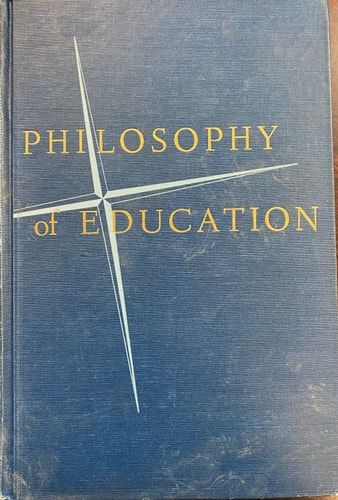
Philosophy of Education
0
0
As an Amazon Associate and affiliate partner, Menrva Books earns from qualifying purchases. Learn more
Author Description
It has been rightly said that only a true philosopher may give a practical shape to education. Philosophy and education go hand in hand. Education depends on philosophy for its guidance while philosophy depends on education for its own formulation. Teaching methods are very much concerned with the philosophy of education the teacher holds. The philosophical systems of education govern the teacher's attitude to the method of teaching. With a view to comprehend the close relationship of philosophy and education and their great significance in the modern times, the present book Philosophy of Education has been written. The book aims at presenting the Western 'isms' of philosophy as well as Indian philosophy of education--beginning from the Vedas to the contemporary philosophies. It elucidates the philosophical issues and attempts to draw the philosophical implications of every 'isms'. Invaluable viewpoints on education of eminent educators like Rousseau, Russell, Swami Dayanand, Annie Besant, M.K. Gandhi, Rabindranath Tagore and many others, and the influence of their philosophies have been studied in depth. It acquaints the readers with the varied aims and ideals of education, methods and principles of teaching, role and influence of teachers as propounded by the great philosophers. Written in a simple language and lucid style, the book is expected to serve as an ideal textbook on the subject. It will prove indispensable for the students and teachers of Education. Question Bank at the end of the book is an added advantage provided to the students which would prove helpful in preparation for examination. Even the general readers will find this book worth-reading.
Menrva's Summary
THE THESIS
This book investigates the symbiotic relationship between philosophical systems and educational practice, arguing that effective teaching is fundamentally rooted in the educator's underlying philosophical framework. Philip H. Phenix, an established scholar in the field, utilizes a comparative approach to examine how various Western and Indian philosophical traditions inform pedagogical methods. The text serves as a comprehensive guide to understanding how abstract philosophical concepts translate into concrete classroom strategies and educational goals.
THE SCOPE MAP
What You Will Find
- Comparative analysis of Western philosophical 'isms' and Indian educational philosophies.
- Historical survey ranging from Vedic traditions to contemporary thought.
- Examination of educational theories from figures such as Rousseau, Russell, Gandhi, and Tagore.
- A dedicated question bank for academic assessment and exam preparation.
Scope Limits
- The text focuses primarily on established philosophical systems and may not cover emerging digital-age pedagogical trends.
- It does not provide a practical 'how-to' manual for classroom management, focusing instead on the theoretical underpinnings of teaching.
THE AUTHORITY PERSPECTIVE
Readers frequently note the clarity of the prose, which makes complex philosophical concepts accessible to students and practitioners alike. Experts highlight this as a foundational text for those seeking to understand the historical and theoretical evolution of educational philosophy.
Page Count:
635
Publication Date:
1958-01-01
Publisher:
HENRY HOLT AND COMPANY
ISBN-10:
0030065453
ISBN-13:
9780030065453
Philosophy
Education
Pedagogy
Schools & Teaching
Education Theory
Educational Theory
Philosophy history
Community Tags
Similar Books