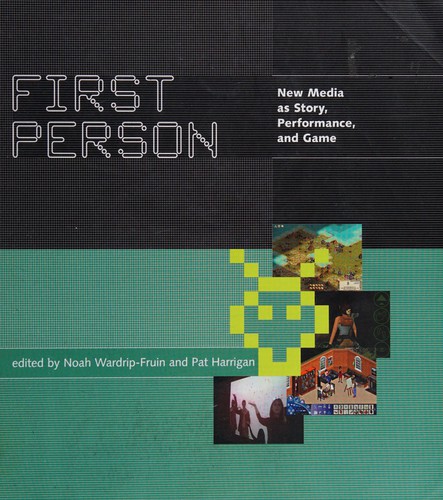
First Person
0
0
As an Amazon Associate and affiliate partner, Menrva Books earns from qualifying purchases. Learn more
Author Description
Electronic games have established a huge international market, significantly outselling non-digital games; people spend more money on The Sims than on "Monopoly" or even on "Magic: the Gathering." Yet it is widely believed that the market for electronic literature -- predicted by some to be the future of the written word -- languishes. Even bestselling author Stephen King achieved disappointing results with his online publication of "Riding the Bullet" and "The Plant."Isn't it possible, though, that many hugely successful computer games -- those that depend on or at least utilize storytelling conventions of narrative, character, and theme -- can be seen as examples of electronic literature? And isn't it likely that the truly significant new forms of electronic literature will prove to be (like games) so deeply interactive and procedural that it would be impossible to present them as paper-like "e-books"? The editors of First Person have gathered a remarkably diverse group of new media theorists and practitioners to consider the relationship between "story" and "game," as well as the new kinds of artistic creation (literary, performative, playful) that have become possible in the digital environment. This landmark collection is organized as a series of discussions among creators and theorists; each section includes three presentations, with each presentation followed by two responses. Topics considered range from "Cyberdrama" to "Ludology" (the study of games), to "The Pixel/The Line" to "Beyond Chat." The conversational structure inspired contributors to revise, update, and expand their presentations as they prepared them for the book, and the panel discussions have overflowed into a First Person web site.
Menrva's Summary
THE THESIS
This collection investigates the burgeoning field of electronic literature by examining the parallels and intersections between interactive digital games and traditional literary forms. The book explores whether successful computer games, with their narrative, character, and thematic elements, can be considered electronic literature. It posits that the most significant new forms of electronic literature will be deeply interactive and procedural, diverging from static e-book formats. The editors have assembled a diverse group of new media theorists and practitioners to discuss these concepts.
THE SCOPE MAP
- Exploration of the relationship between 'story' and 'game' in the digital environment.
- Consideration of new forms of artistic creation possible in digital media, including literary, performative, and playful expressions.
- Organization as a series of discussions among creators and theorists, with each section featuring three presentations and two responses.
- Topics covered include 'Cyberdrama', 'Ludology' (the study of games), 'The Pixel/The Line', and 'Beyond Chat'.
- The conversational structure encouraged contributors to revise and expand their presentations.
- The discussions have extended to a dedicated First Person web site.
THE AUTHORITY PERSPECTIVE
This collection is regarded as a foundational text in the study of electronic literature and game studies, bringing together key thinkers to debate the nature of digital narrative and interactivity. The book's unique structure, featuring dialogues between creators and theorists, offers a dynamic and evolving perspective on the field. Its influence is evident in the ongoing discussions about the literary potential of games and the future of written expression in digital spaces. The work is noted for its forward-thinking approach to understanding new media forms.
Page Count:
331
Publication Date:
2004-01-01
ISBN-10:
0262232324
Non-Fiction
Game Studies
Literary theory
Digital Media
Community Tags
Similar Books