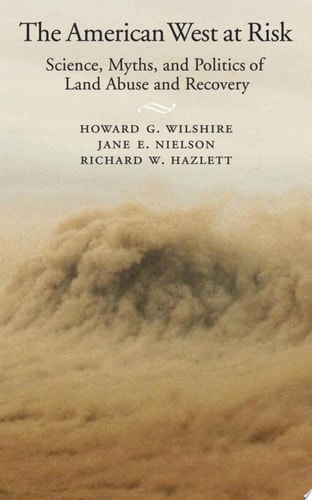
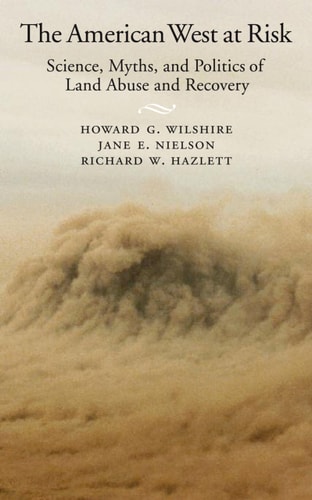
The American West at Risk
0
0
As an Amazon Associate and affiliate partner, Menrva Books earns from qualifying purchases. Learn more
Author Description
The American West At Risk Summarizes The Dominant Human-generated Environmental Challenges In The 11 Contiguous Arid Western United States - America's Legendary, Even Mythical, Frontier. When Discovered By European Explorers And Later Settlers, The West Boasted Rich Soils, Bountiful Fisheries, Immense, Dense Forests, Sparkling Streams, Untapped Ore Deposits, And Oil Bonanzas. It Now Faces Depletion Of Many Of These Resources, And Potentially Serious Threats To Its Few Renewable Resources. The Importance Of This Story Is That Preserving Lands Has A Central Role For Protecting Air And Water Quality, And Water Supplies--and All Support A Healthy Living Environment. The Idea That All Life On Earth Is Connected In A Great Chain Of Being, And That All Life Is Connected To The Physical Earth In Many Obvious And Subtle Ways, Is Not Some New-age Fad, It Is Scientifically Demonstrable. An Understanding Of Earth Processes, And The Significance Of Their Biological Connections, Is Critical In Shaping Societal Values So That National Land Use Policies Will Conserve The Earth And Avoid The Worst Impacts Of Natural Processes. These Connections Inevitably Lead Science Into The Murkier Realms Of Political Controversy And Bureaucratic Stasis. Most Of The Chapters In The American West At Risk Focus On A Human Land Use Or Activity That Depletes Resources And Degrades Environmental Integrity Of This Resource-rich, But Tender And Slow-to-heal, Western U.s. The Activities Include Forest Clearing For Many Purposes; Farming And Grazing; Mining For Aggregate, Metals, And Other Materials; Energy Extraction And Use; Military Training And Weapons Manufacturing And Testing; Road And Utility Transmission Corridors; Recreation; Urbanization; And Disposing Of The Wastes Generated By Everything That We Do. We Focus On How Our Land-degrading Activities Are Connected To Natural Earth Processes, Which Act To Accelerate And Spread The Damages We Inflict On The Land. Visit Www.theamericanwestatrisk.com To
Menrva's Summary
THE THESIS
This book investigates the critical intersection between human land-use activities and the degradation of natural environmental systems across the eleven contiguous arid states of the American West. The authors, Howard G. Wilshire, Jane E. Nielson, and Richard W. Hazlett, utilize their expertise in geology and environmental science to argue that the depletion of resources is not merely a local issue but a systemic failure to respect the interconnectedness of Earth's biological and physical processes. By examining the historical transition from a resource-rich frontier to a landscape under stress, the authors provide a framework for understanding how national land-use policies must evolve to prioritize conservation and mitigate the long-term impacts of human industry.
THE SCOPE MAP
What You Will Find
- Comprehensive analysis of human activities including mining, energy extraction, military testing, and urbanization.
- Examination of the physical and biological consequences of forest clearing, grazing, and waste disposal.
- Scientific evidence linking human land-degradation to the acceleration of natural geological and ecological damage.
- A call for policy reform based on the demonstrable connection between land preservation and the maintenance of essential air, water, and soil quality.
THE AUTHORITY PERSPECTIVE
Experts and environmental researchers recognize this text as a thorough, data-driven examination of the specific ecological vulnerabilities inherent to the arid American West. Readers frequently note the academic density of the prose, which serves as a foundational resource for those studying the intersection of public policy, geology, and environmental management.
Page Count:
640
Publication Date:
2008-01-01
Publisher:
Oxford University Press
ISBN-10:
0199722617
ISBN-13:
9780199722617
Ecology
Geography
Conservation
Land Use
Community Tags
Similar Books


Reader Comments
Share Your Thoughts
No comments yet. Be the first to share your thoughts!