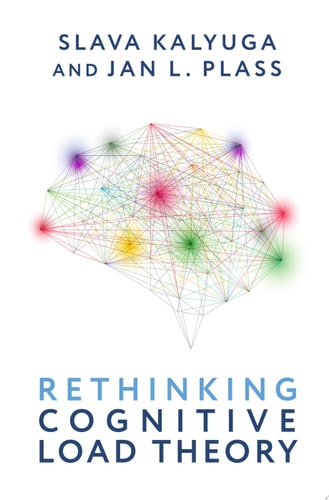
Rethinking Cognitive Load Theory
0
0
As an Amazon Associate and affiliate partner, Menrva Books earns from qualifying purchases. Learn more
Author Description
Cognitive load theory (CLT) considers instructional implications of characteristics of human cognition, such as processing limitations of working memory and the size and organization of the learner's knowledge base in long-term memory. CLT traditionally described how the limited capacity of working memory may cause cognitive overload and inhibit learning. Rethinking Cognitive Load Theory reflects on recent developments of this theory and proposes some essential modifications to improve its effectiveness in designing modern, technology-based, complex learning environments. The book describes a way of reconceptualizing the theory so that it can better account for the multifaceted nature of learner cognition that has emerged in recent research. It considers complex learning tasks as involving various goals of learner activities that need combining cognitive, motivational, and affective perspectives.The book starts with a review of basic tenets of the current understanding of CLT, including major components of human cognitive architecture, their characteristics and effects on cognitive load. It summarizes the modifications that have been made to CLT to date, including redefining types of cognitive load and applying an evolutionary approach. The criticisms of the theory that have been expressed over the years are reviewed and possible modifications to CLT that could enhance its usability are explored. The book considers existing instructional theories (e.g., problem-first, productive failure or invention learning) as evidence for the goal-driven approach, and offers examples of specific learning tasks and related motivational and affective goals of learner activities to illustrate the goal-driven approach to CLT using simulation- and game-based learning environments. Finally, the book provides theoretical and practical implications of the proposed new approach. This reframing of CLT is expected to result in a more learner-cantered framework in accordance with recent trends in instructional science and educational technology.
Menrva's Summary
THE THESIS
This book investigates how Cognitive Load Theory (CLT) must be reconceptualized to address the complexities of modern, technology-based learning environments. Authors Jan L. Plass and Slava Kalyuga, both established experts in educational psychology and instructional design, synthesize recent research to propose a more learner-centered framework. They argue that traditional models of working memory limitations are insufficient for contemporary learning, necessitating an integration of cognitive, motivational, and affective perspectives to improve instructional effectiveness.
THE SCOPE MAP
What You Will Find
- A review of the foundational tenets of Cognitive Load Theory and human cognitive architecture.
- An analysis of recent modifications to CLT, including evolutionary approaches and redefined load types.
- A goal-driven framework for designing simulation- and game-based learning environments.
- Integration of instructional theories such as problem-first learning and productive failure.
Scope Limits
- The text does not provide a comprehensive history of all psychological theories of learning.
- It focuses primarily on technology-based and complex learning environments rather than traditional classroom lecture settings.
THE AUTHORITY PERSPECTIVE
Experts in the field of instructional design recognize this work as a significant update to a foundational theory, particularly for those working in digital learning design. Readers frequently note the academic density of the prose, which is tailored for researchers and practitioners familiar with cognitive psychology principles.
Page Count:
144
Publication Date:
2025-09-19
Publisher:
Oxford University Press
ISBN-10:
0190078502
ISBN-13:
9780190078508
Educational Technology
Cognitive Psychology
Education
Counseling Psychology
Education & Training
Instructional Design
Learning Theory
Cognitive
Community Tags
Similar Books