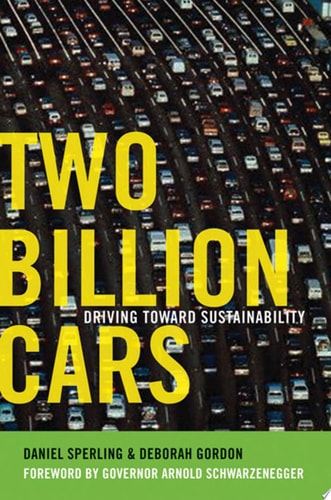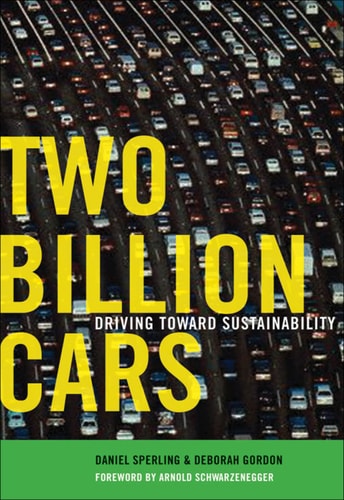
Two Billion Cars: Driving Toward Sustainability
0
0
As an Amazon Associate and affiliate partner, Menrva Books earns from qualifying purchases. Learn more
Author Description
Today there are over a billion vehicles in the world, and within twenty years, the number will double, largely a consequence of China's and India's explosive growth. Given that greenhouse gases are already creating havoc with our climate and that violent conflict in unstable oil-rich nations is on the rise, will matters only get worse? Or are there hopeful signs that effective, realistic solutions can be found? Blending a concise history of cars and their impact on the world, leading transportation experts Daniel Sperling and Deborah Gordon explain how we arrived at this state, and what we can do about it. Sperling and Gordon assign blame squarely where it belongs-on the auto-industry, short-sighted government policies, and consumers. They explore such solutions as getting beyond the gas-guzzler monoculture, re-inventing cars, searching for low-carbon fuels, and more. Promising advances in both transportation technology and fuel efficiency together with shifts in traveler behavior, they suggest, offer us a way out of our predicament. The authors conclude that the two places that have the most troublesome emissions problems--California and China--are the most likely to become world leaders on these issues. Arnold Schwarzenegger's enlightened embrace of eco-friendly fuel policies, which he discusses in the foreword, and China's forthright recognition that it needs far-reaching environmental and energy policies, suggest that if they can tackle the issue effectively and honestly, then there really is reason for hope. Updated with a new afterword that sheds light on the profound changes in the global economy in the last year, Two Billion Cars makes the case for why and how we need to transform transportation now more than ever.
Menrva's Summary
THE THESIS
Can the global transportation sector transition to sustainable practices before the projected doubling of the world's vehicle population leads to irreversible climate and geopolitical instability? Daniel Sperling and Deborah Gordon, both recognized experts in transportation policy and engineering, utilize historical data and current industry trends to argue that the current reliance on fossil fuels is a product of systemic failure by governments, manufacturers, and consumers. They propose a multi-faceted framework for reform that emphasizes technological innovation, fuel efficiency, and significant shifts in consumer behavior to mitigate the environmental impact of global mobility.
THE SCOPE MAP
What You Will Find
- Historical analysis of the automotive industry's development and its global environmental footprint.
- Evaluation of emerging low-carbon fuel technologies and vehicle design improvements.
- Case studies focusing on the regulatory and environmental policy shifts in California and China.
- Strategic recommendations for government policy reform and consumer behavioral changes to reduce greenhouse gas emissions.
THE AUTHORITY PERSPECTIVE
Experts and critics frequently cite this work as a foundational text for understanding the intersection of global energy policy and automotive engineering. Readers note that the authors provide a balanced, data-driven approach that avoids alarmism while maintaining a clear sense of urgency regarding climate change.
Page Count:
321
Publication Date:
2008-01-01
Publisher:
Oxford University Press
ISBN-10:
0199744017
ISBN-13:
9780199744015
Environmental
Nature
Motor Vehicles
Public Policy
Sustainability
Transportation
Environment
Energy
Motor Fuels
Technology
Trades & Technology
Community Tags
Similar Books