Divine Comedy of Dante Alighieri
0
0
As an Amazon Associate and affiliate partner, Menrva Books earns from qualifying purchases. Learn more
Author Description
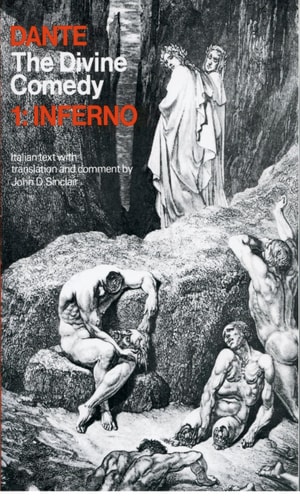
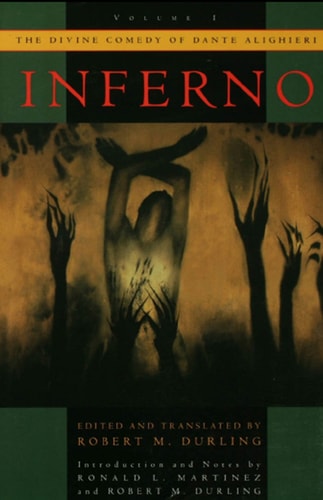
This First Volume Of Robert Durling's New Translation Of The Divine Comedy Brings A New Power And Accuracy To The Rendering Of Dante's Extraordinary Vision Of Hell, With All Its Terror, Pathos, And Humor. Remarkably True To Both The Letter And Spirit Of This Central Work Of Western Literature, Durling's Is A Prose Translation (the First To Appear In Twenty-five Years), And Is Thus Free Of The Exigencies Of Meter And Rhyme That Hamper Recent Verse Translations. As Durling Notes, The Closely Literal Style Is A Conscious Effort To Convey In Part The Nature Of Dante's Italian, Notoriously Craggy And Difficult Even For Italians. Rigorously Accurate As To Meaning, It Is Both Clear And Supple, While Preserving To An Unparalleled Degree The Order And Emphases Of Dante's Complex Syntax. The Durling-martinez Inferno Is Also User-friendly. The Italian Text, Newly Edited, Is Printed On Each Verso Page; The English Mirrors It In Such A Way That Readers Can Easily Find Themselves In Relation To The Original Terza Rima. Designed With The First-time Reader Of Dante In Mind, The Volume Includes Comprehensive Notes And Textual Commentary By Martinez And Durling: Both Are Life-long Students Of Dante And Other Medieval Writers (their Purgatorio And Paradiso Will Appear Next Year). Their Introduction Is A Small Masterpiece Of Its Kind In Presenting Lucidly And Concisely The Historical And Conceptual Background Of The Poem. Sixteen Short Essays Are Provided That Offer New Inquiry Into Such Topics As The Autobiographical Nature Of The Poem, Dante's Views On Homosexuality, And The Recurrent, Problematic Body Analogy (hell Has A Structure Parallel To That Of The Human Body). The Extensive Notes, Containing Much New Material, Explain The Historical, Literary, And Doctrinal References, Present What Is Known About The Damned Souls Dante Meets --from The Lovers Who Spend Eternity In The Whirlwind Of Their Passion, To Count Ugolino, Who Perpetually Gnaws At His Enemy's Skull--disentangle The Vex
Menrva's Summary
THE PULSE
A man finds himself lost in a dark wood, initiating a descent through the circles of Hell to confront the nature of sin and redemption. The protagonist, Dante, seeks a path toward spiritual salvation while guided by the poet Virgil through the physical and metaphysical landscape of the afterlife. The narrative follows a rigorous, structured descent, constrained by the theological and moral geography of the medieval worldview. Presented in a first-person perspective, the work utilizes a complex allegorical framework to examine the consequences of human choices within a divine order.
INSIDE THE PAGES
- Use of the terza rima rhyme scheme in the original Italian text
- Allegorical representation of moral and political figures from the medieval era
- Systematic categorization of sins and their corresponding punishments
- Integration of classical mythology with Christian theology
- Detailed exploration of the human condition and the nature of justice
- Vivid, sensory-rich descriptions of the various circles of the underworld
- Philosophical dialogues regarding free will and divine providence
- Structural parallels between the geography of Hell and the human body
THE COLLECTIVE ECHO
Readers and scholars frequently highlight the immense historical and theological density of this work, noting that it serves as a foundational pillar of Western literature. Discussion often centers on the effectiveness of the translation in capturing the craggy, difficult nature of the original Italian syntax while maintaining clarity for modern audiences. Critics emphasize the balance between the poem's grim, visceral imagery and its underlying philosophical inquiry into the soul's trajectory. Many readers find the extensive commentary and notes provided in this edition essential for navigating the complex web of medieval references and doctrinal nuances. The work remains a subject of intense study due to its intricate structure and the enduring relevance of its moral questions.
Page Count:
672
Publication Date:
1996-01-01
Publisher:
Oxford University Press, Incorporated
ISBN-10:
0199770336
ISBN-13:
9780199770335
Religion
Poetry
Philosophy
Medieval
Epic
classic
Community Tags
Similar Books

Reader Comments
Share Your Thoughts
No comments yet. Be the first to share your thoughts!