
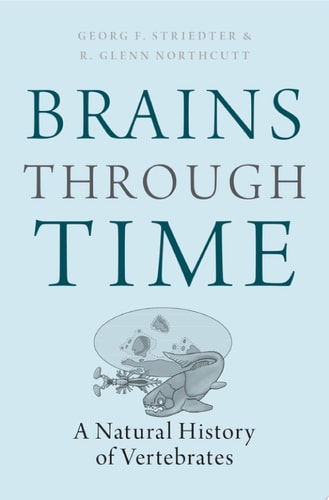
Brains Through Time: A Natural History Of Vertebrates
0
0
As an Amazon Associate and affiliate partner, Menrva Books earns from qualifying purchases. Learn more
Author Description
Much Is Conserved In Vertebrate Evolution, But Significant Changes In The Nervous System Occurred At The Origin Of Vertebrates And In Most Of The Major Vertebrate Lineages. This Book Examines These Innovations And Relates Them To Evolutionary Changes In Other Organ Systems, Animal Behavior, And Ecological Conditions At The Time. The Resulting Perspective Clarifies What Makes The Major Vertebrate Lineages Unique And Helps Explain Their Varying Degrees Of Ecological Success. One Of The Book's Major Conclusions Is That Vertebrate Nervous Systems Are More Diverse Than Commonly Assumed, At Least Among Neurobiologists. Examples Of Important Innovations Include Not Only The Emergence Of Novel Brain Regions, Such As The Cerebellum And Neocortex, But Also Major Changes In Neuronal Circuitry And Functional Organization. A Second Major Conclusion Is That Many Of The Apparent Similarities In Vertebrate Nervous Systems Resulted From Convergent Evolution, Rather Than Inheritance From A Common Ancestor. For Example, Brain Size And Complexity Increased Numerous Times, In Many Vertebrate Lineages. In Conjunction With These Changes, Olfactory Inputs To The Telencephalic Pallium Were Reduced In Several Different Lineages, And This Reduction Was Associated With The Emergence Of Pallial Regions That Process Non-olfactory Sensory Inputs. These Conclusions Cast Doubt On The Widely Held Assumption That All Vertebrate Nervous Systems Are Built According To A Single, Common Plan. Instead, The Book Encourages Readers To View Both Species Similarities And Differences As Fundamental To A Comprehensive Understanding Of Nervous Systems. Evolution; Phylogeny; Neuroscience; Neurobiology; Neuroanatomy; Functional Morphology; Paleoecology; Homology; Endocast; Brain-- 1. Reconstructing History: Aims And Methodology -- 2. The Origin Of Vertebrates: Invertebrate Chordates And Cyclostomes -- 3. The Origin Of Jaws And Paired Fins: The Age Of Fishes -- 4. The Invasion Of Land: Lobe-finned Fishes And Amphibians -- 5. The Conquest Of Land: Amniote Origins And The Age Of Reptiles -- 6. The Rise Of Endothermy: Mammals, But Also Birds -- 7. Synthesis: Patterns And Principles -- Appendix: Evolution Of The Cranial Nerves. Georg F. Striedter And R. Glenn Northcutt. Includes Bibliographical References And Index.
Menrva's Summary
THE THESIS
This book investigates the evolutionary history of vertebrate nervous systems to determine how neural innovations correlate with ecological success and lineage-specific adaptations. Georg F. Striedter, a specialist in neurobiology and evolutionary brain development, synthesizes comparative neuroanatomy, fossil evidence, and phylogenetic data to challenge the notion of a singular, conserved vertebrate brain plan. He argues that nervous systems exhibit significant diversity driven by convergent evolution rather than simple ancestral inheritance.
THE SCOPE MAP
What You Will Find
- Comparative analysis of brain structures across major vertebrate lineages including fish, amphibians, and mammals.
- Examination of key neural innovations such as the cerebellum and neocortex.
- Discussion of the relationship between brain complexity, sensory input shifts, and environmental pressures.
Scope Limits
- The text focuses primarily on macro-evolutionary trends rather than detailed molecular or genetic mechanisms.
- It does not provide an exhaustive survey of every extant vertebrate species, focusing instead on major evolutionary transitions.
THE AUTHORITY PERSPECTIVE
Experts recognize this work as a significant contribution to comparative neurobiology that effectively bridges the gap between paleontology and modern neuroscience. Readers frequently note the academic density of the prose, which requires a foundational understanding of biological terminology to fully grasp the evolutionary arguments presented.
Page Count:
0
Publication Date:
1900-01-01
Publisher:
Oxford University Press,
ISBN-10:
0190081465
ISBN-13:
9780190081461
Science
Neuroanatomy
Nervous System
Vertebrates
Neuroscience
Evolution
Vertébrés
Cerveau
Paleoecology
Evolutionary Biology
Community Tags
Similar Books













Reader Comments
Share Your Thoughts
No comments yet. Be the first to share your thoughts!