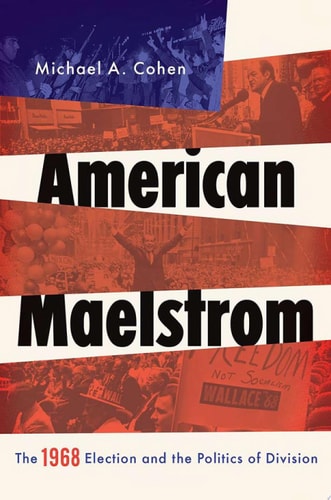
American Maelstrom
0
0
As an Amazon Associate and affiliate partner, Menrva Books earns from qualifying purchases. Learn more
Author Description
In His Presidential Inaugural Address Of January 1965, Lyndon Johnson Offered An Uplifting Vision For America, One That Would End Poverty And Racial Injustice. Elected In A Landslide Over The Conservative Republican Barry Goldwater And Bolstered By The So-called Liberal Consensus, Economic Prosperity, And A Strong Wave Of Nostalgia For His Martyred Predecessor, John Kennedy, Johnson Announced The Most Ambitious Government Agenda In Decades. Three Years Later, Everything Had Changed. Johnson's Approval Ratings Had Plummeted; The Liberal Consensus Was Shattered; The War In Vietnam Splintered The Nation; And The Politics Of Civil Rights Had Created A Fierce White Backlash. A Report From The National Committee For An Effective Congress Warned Of A National Nervous Breakdown. The Election Of 1968 Was Immediately Caught Up In A Swirl Of Powerful Forces, And The Nine Men Who Sought The Nation's Highest Office That Year Attempted To Ride Them To Victory-or Merely Survive Them. On The Democratic Side, Eugene Mccarthy Energized The Anti-war Movement; George Wallace Spoke To The Working-class White Backlash; Robert Kennedy Took On The Mantle Of His Slain Brother. Entangled In Vietnam, Johnson, Stunningly, Opted Not To Run Again, Scrambling The Odds. On The Republican Side, 1968 Saw The Vindication Of Richard Nixon, Who Outhustled Nelson Rockefeller, Ronald Reagan And George Romney, By Navigating Between The Conservative And Moderate Wings Of The Republican Party. The Assassinations Of First Martin Luther King, Jr., And Then Kennedy Seemed To Push The Country To The Brink Of Chaos, A Chaos Reflected In The Democratic Convention In Chicago, A Televised Horror Show. Vice President Hubert Humphrey Emerged As The Nominee, And, Finally Liberating Himself From Johnson's Grip, Nearly Overcame The Lead Long Enjoyed By Nixon Who, By Exploiting Division And Channeling The National Yearning For Order, Would Be The Last Man Standing. In American Maelstrom, Michael A. Cohen Captures The Ful
Menrva's Summary
THE THESIS
This book investigates how the tumultuous events of 1968 shattered the post-war liberal consensus and fundamentally reshaped the trajectory of American political life. Michael A. Cohen, a political analyst and historian, utilizes primary source documents, contemporary reporting, and historical records to examine the collapse of Lyndon Johnson's administration. He argues that the convergence of the Vietnam War, civil rights unrest, and political assassinations created a volatile environment that allowed Richard Nixon to redefine the national political landscape through a promise of order.
THE SCOPE MAP
What You Will Find
- A detailed analysis of the 1968 presidential election cycle and the nine primary candidates involved.
- Examination of the shifting ideological boundaries within the Democratic and Republican parties during the late 1960s.
- Historical accounts of major events including the Vietnam War, the Chicago Democratic Convention, and the assassinations of Martin Luther King, Jr. and Robert Kennedy.
- A study of the rise of the white working-class backlash and its impact on electoral outcomes.
THE AUTHORITY PERSPECTIVE
Experts and political historians frequently cite this work as a comprehensive account of one of the most chaotic years in American political history. Readers note the author's ability to synthesize complex social and political shifts into a clear, accessible narrative for both scholars and general audiences.
Page Count:
320
Publication Date:
2016-01-01
Publisher:
Oxford University Press
ISBN-10:
0199777616
ISBN-13:
9780199777617
Politics
Biography
History
20th Century
United States
Community Tags
Similar Books