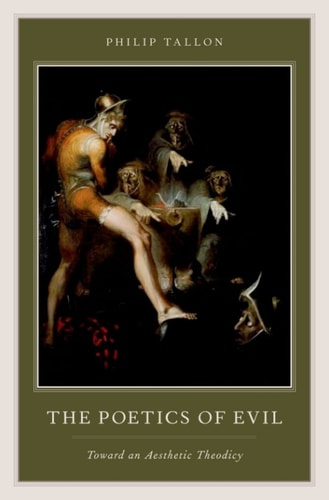
The Poetics of Evil: Toward an Aesthetic Theodicy
0
0
As an Amazon Associate and affiliate partner, Menrva Books earns from qualifying purchases. Learn more
Author Description
What role does art play in unravelling the theological problem of evil? What can aesthetics show us about God's goodness in a world of iniquity? Philip Tallon constructs an aesthetic theodicy through a fascinating examination of Christian aesthetics, ranging from the writings of Augustine to contemporary philosophy. Tallon offers a new framework for theodicy that allows the substantial inclusion of aesthetics, building on the work of Eleonore Stump. He then examines the concept of cosmic harmony, the predominant aesthetic motif within medieval theodicy, and shows how Augustine develops this theme by interweaving his metaphysical, moral, and aesthetic views of reality. Tallon then examines other aesthetic themes within theodicy, with special attention to tragedy, a motif that has become increasingly integrated into theodicy in the nineteenth and twentieth centuries. He shows where tragedy falls short as a sufficient theme for theodicy, but also demonstrates how it complements Augustine's theme of cosmic harmony. Finally, Tallon considers the horror of evil, an aesthetic theme that has often been used as an attack on the existence of God, but which has recently been used to understand how theodicy should be formulated to respond to the worst evils. By digging more deeply into the darker side of aesthetics, The Poetics of Evil offers a deeper perception of tragedy and malevolence, but also a richer understanding of the Christian response to the problem of evil.
Menrva's Summary
THE THESIS
This book investigates how aesthetic frameworks can provide a meaningful response to the theological problem of evil. Philip Tallon, a scholar of philosophy and theology, utilizes a historical and analytical approach to bridge the gap between traditional theodicy and aesthetic theory. By synthesizing the work of figures like Augustine with contemporary philosophical discourse, he constructs a framework that accounts for both cosmic harmony and the reality of human suffering.
THE SCOPE MAP
What You Will Find
- An analysis of the aesthetic motif of cosmic harmony in medieval theological thought.
- A critical evaluation of tragedy as a framework for understanding theodicy in modern philosophy.
- A study of the horror of evil and its role in contemporary arguments regarding the existence of God.
- A proposed aesthetic theodicy that integrates historical Christian perspectives with modern philosophical inquiry.
THE AUTHORITY PERSPECTIVE
Scholars and theologians recognize this work as a significant contribution to the intersection of aesthetics and theodicy. Readers frequently note the academic density of the prose, which serves as a rigorous exploration for those familiar with philosophical theology.
Page Count:
288
Publication Date:
2011-01-01
Publisher:
Oxford University Press
ISBN-10:
0199779112
ISBN-13:
9780199779116
Religion
Philosophy
Christianity
Ethics
Theology
Aesthetics
Theodicy
Community Tags
Similar Books