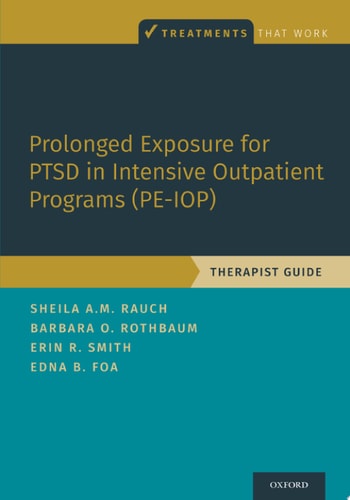
Prolonged Exposure for PTSD in Intensive Outpatient Programs (PE-IOP): Therapist Guide
0
0
As an Amazon Associate and affiliate partner, Menrva Books earns from qualifying purchases. Learn more
Author Description
Prolonged Exposure for PTSD in Intensive Outpatient Programs (PE-IOP) presents an innovative PTSD treatment model for the use of prolonged exposure (PE) in residential and intensive outpatient programs, which increases access to care and retention in care while providing transformational symptom outcomes. Drs. Rauch, Rothbaum, Smith, and Foa present the elements of the PE protocol along with all the logistics for how to provide PE in an intensive outpatient program. PE is the most widely studied treatment for PTSD, with over 100 studies showing its efficacy for PTSD and comorbid patient populations-from single incident and multiple incident traumas of all types (e.g., combat, sexual assault, etc.) Variations and considerations for implementation are presented to allow providers designing programs to consider what best fits their patient population and setting. Patient and provider forms are included for use. As leaders in clinical practice, training, and research in the field of PTSD treatment, Drs. Rauch, Rothbaum, Smith, and Foa provide concise but thorough description of the key components of the program, how to implement them, and when and how to consider adaptations.
Menrva's Summary
THE THESIS
This guide investigates the logistical and clinical framework required to adapt Prolonged Exposure (PE) therapy for use within intensive outpatient and residential treatment settings. The authors, who are established leaders in PTSD research and clinical practice, synthesize decades of efficacy data to provide a structured manual for mental health professionals. By detailing the core components of the PE protocol, the text argues that intensive delivery models can improve patient access and retention without sacrificing therapeutic outcomes.
THE SCOPE MAP
What You Will Find
- Clinical protocols for implementing Prolonged Exposure in intensive outpatient programs
- Administrative and logistical considerations for program design
- Standardized patient and provider forms for clinical use
- Adaptations for diverse trauma populations including combat and sexual assault survivors
Scope Limits
- The text does not provide general diagnostic criteria for PTSD
- It does not cover long-term maintenance therapy beyond the intensive program structure
THE AUTHORITY PERSPECTIVE
Experts in the field recognize this manual as a specialized extension of the established PE protocol, specifically tailored for high-acuity clinical environments. Practitioners frequently note that the inclusion of practical forms and implementation strategies makes this a functional resource for program directors and clinicians.
Page Count:
214
Publication Date:
2020-01-01
Publisher:
Oxford University Press
ISBN-10:
0190081945
ISBN-13:
9780190081942
Psychology
PTSD Treatment
Mental Health
Therapy Guide
Psychotherapy
Community Tags
Similar Books