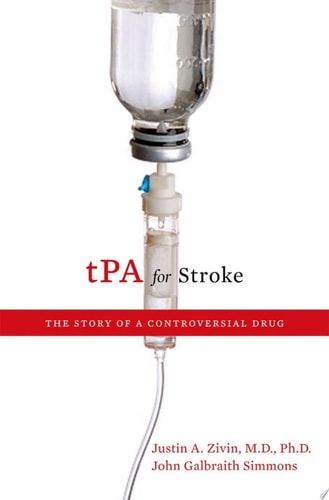
tPA for Stroke: The Story of a Controversial Drug
0
0
As an Amazon Associate and affiliate partner, Menrva Books earns from qualifying purchases. Learn more
Author Description
Without warning stroke can paralyze, blind, or kill. Some victims recover, but many do not and may even suffer another disabling or fatal attack. The drug known as tPA can drastically reduce the long-term disability associated with stroke, but despite its near-miraculous capabilities and the growing support of most neurologists, it has been slow to win acceptance as the standard of care in emergency departments nationwide. tPA for Stroke chronicles how this remarkable drug came to be tested in stroke victims, its early years in development by the pharmaceutical giant Genentech, and its eventual marginalization due to a convergence of unfavorable political, fiscal, and medical circumstances. For instance, initially many stroke specialists were unconvinced that the drug's benefits outweigh its risks (tPA was originally developed and is still used for cardiac patients). Moreover, neurologists called upon to assess stroke patients have not typically been trained to make decisions in emergency settings--and tPA must be given within a scant few hours after stroke. These and other factors have continued to delay the drug's universal acceptance as the most effective treatment available, and to hamper the general public's awareness that such a treatment exists--a troubling state of affairs that Zivin and Simmons argue must be rectified. Instilling the knowledge that anyone, at any time, is susceptible to stroke, from the old and infirm to the young and healthy, tPA for Stroke is a clarion call to awareness in a rapidly changing healthcare environment in which stroke, long a disease in thrall to resignation and pessimism, must be neglected no longer.
Menrva's Summary
THE THESIS
This book investigates the complex medical, political, and fiscal barriers that have prevented the widespread adoption of tPA as the standard emergency treatment for stroke victims. The authors, Justin A. Zivin, a physician and researcher, and John Galbraith Simmons, a medical writer, utilize historical development records and clinical data to argue that systemic inertia and professional skepticism have hindered the implementation of a life-saving intervention. They present a critical analysis of how institutional resistance and a lack of emergency training among neurologists have marginalized a drug with proven efficacy in reducing long-term disability. The work serves as both a historical account of pharmaceutical development and a policy critique regarding the current state of stroke care.
THE SCOPE MAP
What You Will Find
- Historical development of tPA by Genentech and its initial application in cardiac care.
- Analysis of the clinical trials and the subsequent debate regarding the risk-benefit ratio of the drug.
- Examination of the structural challenges within emergency departments and the training gaps for stroke specialists.
- Discussion of the economic and political factors that influenced the drug's market acceptance and public awareness.
THE AUTHORITY PERSPECTIVE
Experts and medical professionals recognize this text as a significant case study in the challenges of translating clinical research into standard emergency room practice. Readers frequently note the clarity with which the authors navigate the intersection of pharmaceutical history and the practical realities of modern healthcare systems.
Page Count:
191
Publication Date:
2010-01-01
Publisher:
Oxford University Press
ISBN-10:
0199780943
ISBN-13:
9780199780945
History
Science
Health
Neurology
Human Disease
Medical
Medicine
Allied Health
Pharmacology
Community Tags
Similar Books