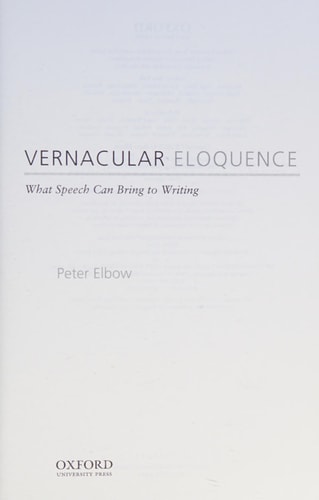
Vernacular Eloquence: What Speech Can Bring to Writing
0
0
As an Amazon Associate and affiliate partner, Menrva Books earns from qualifying purchases. Learn more
Author Description
Since the publication of his groundbreaking books Writing Without Teachers and Writing with Power, Peter Elbow has revolutionized how people think about writing. Now, in Vernacular Eloquence, he makes a vital new contribution to both practice and theory. The core idea is simple: we can enlist virtues from the language activity most people find easiest-speaking-for the language activity most people find hardest-writing. Speech, with its spontaneity, naturalness of expression, and fluidity of thought, has many overlooked linguistic and rhetorical merits. Through several easy to employ techniques, writers can marshal this "wisdom of the tongue" to produce stronger, clearer, more natural writing.This simple idea, it turns out, has deep repercussions. Our culture of literacy, Elbow argues, functions as though it were a plot against the spoken voice, the human body, vernacular language, and those without privilege-making it harder than necessary to write with comfort or power. Giving speech a central role in writing overturns many empty preconceptions. It causes readers to think critically about the relationship between speech, writing, and our notion of literacy. Developing the political implications behind Elbow's previous books, Vernacular Eloquence makes a compelling case that strengthening writing and democratizing it go hand in hand.
Menrva's Summary
THE THESIS
This book investigates how the inherent strengths of spoken language can be utilized to improve the clarity, naturalness, and accessibility of written prose. Peter Elbow, a prominent figure in composition theory, draws upon decades of pedagogical experience to argue that the traditional academic divide between speech and writing is artificial and counterproductive. He presents a framework that encourages writers to leverage the spontaneity and fluidity of their spoken voice to overcome common anxieties and stylistic rigidity in their writing process.
THE SCOPE MAP
What You Will Find
- Techniques for integrating oral spontaneity into formal writing practices
- A critical analysis of cultural biases against vernacular language in literacy education
- Examination of the historical and political implications of prioritizing formal written standards over natural speech
- Practical methods for developing a more authentic and powerful authorial voice
THE AUTHORITY PERSPECTIVE
Educators and writing scholars frequently cite this work as a significant extension of Elbow's earlier theories on the democratization of literacy. Experts highlight the text as a thoughtful challenge to rigid academic conventions that often alienate writers from their own natural expression.
Page Count:
456
Publication Date:
2012-01-13
Publisher:
Oxford University Press
ISBN-10:
0199782504
ISBN-13:
9780199782505
Non-Fiction
Rhetoric
Education
Language
Writing
Community Tags
Similar Books