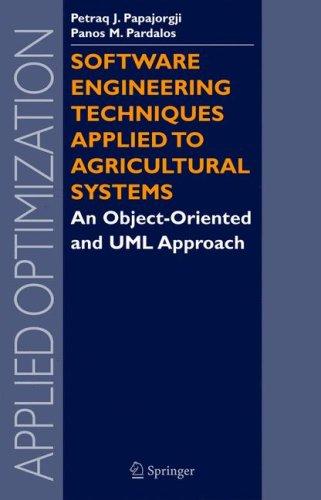
Software Engineering Techniques Applied to Agricultural Systems
0
0
As an Amazon Associate and affiliate partner, Menrva Books earns from qualifying purchases. Learn more
Author Description
Software Engineering Techniques Applied to Agricultural Systems presents cutting-edge software engineering techniques for designing and implementing better agricultural software systems based on the object-oriented paradigm and the Unified Modeling Language (UML). The book is divided in two parts: The first part presents concepts of the object-oriented paradigm and the UML notation of these concepts, and the second part provides a number of examples of applications that use the material presented in the first part. The examples presented illustrate the techniques discussed, focusing on how to construct better models using objects and UML diagrams. More advanced concepts such as distributed systems and examples of how to build these systems are presented in the last chapter of the book. The book presents a step-by-step approach for modeling agricultural systems, starting with a conceptual diagram representing elements of the system and their relationships. Furthermore, diagrams such as sequential and collaboration diagrams are used to explain the dynamic and static aspects of the software system. Audience This book is intended for anyone involved in software development projects in agriculture, including managers, team leaders, developers and modellers of agricultural and environmental systems.
Menrva's Summary
THE THESIS
This book introduces advanced software engineering techniques for agricultural systems, focusing on object-oriented design and UML. It is structured into two parts: the first details object-oriented concepts and UML notation, while the second provides practical application examples. The text guides readers through constructing models using objects and UML diagrams, illustrating both static and dynamic software aspects with sequential and collaboration diagrams. The final chapter explores distributed systems and their construction within an agricultural context.
THE SCOPE MAP
- Object-Oriented Paradigm Concepts
- Unified Modeling Language (UML) Notation
- Examples of Agricultural Software Applications
- Techniques for Constructing Models with Objects and UML Diagrams
- Sequential and Collaboration Diagrams for System Aspects
- Concepts and Examples of Distributed Systems in Agriculture
THE AUTHORITY PERSPECTIVE
The book is aimed at professionals involved in software development for agriculture, including managers, team leaders, developers, and modelers. Its focus on practical application and step-by-step modeling suggests it serves as a technical guide for improving agricultural software design. The inclusion of advanced topics like distributed systems indicates a scope intended for those with some existing knowledge of software engineering principles.
Page Count:
262
Publication Date:
2010-01-01
ISBN-10:
1441939261
ISBN-13:
9781441939265
Science
Science & Technology
Non-Fiction
Distributed Systems
Object-Oriented Programming
Software Engineering
Community Tags
Similar Books