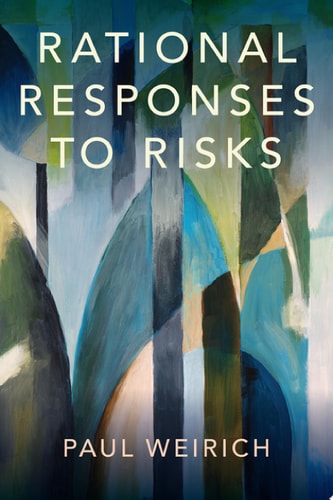
Rational Responses to Risks
0
0
As an Amazon Associate and affiliate partner, Menrva Books earns from qualifying purchases. Learn more
Author Description
Good decisions account for risks. For example, the risk of an accident while driving in the rain makes a reasonable driver decide to slow down. While risk is a large topic in theoretical disciplines such as economics and psychology, as well as in practical disciplines such as medicine and finance, philosophy has a unique contribution to make in developing a normative theory of risk that states what risk is, and to what extent our responses to it are rational.Weirich here develops a philosophical theory of the rationality of responses to risk. He first distinguishes two types of risk: first, a chance of a bad event, and second, an act's risk in relation to its possible outcomes. He argues that this distinction has normative significance in the sense that one's attitudes towards these types of risks - and how one acts on them - are governed by different general principles of rationality. Consequently, a comprehensive account of risk must not only characterize rational responses to risk but also explain why these responses are rational. Weirich explains how, for a rational ideal agent, the expected utilities of the acts available in a decision problem explain the agent's preferences among the acts. As a result, maximizing expected utility is just following preferences among the acts. His view takes an act's expected utility, not just as a feature of a representation of preferences among acts, but also as a factor in the explanation of preferences among acts.The book's precise formulation of general standards of rationality for attitudes and for acts, and its rigorous argumentation for these standards, make it philosophical; but while mainly of interest to philosophers, its broader arguments will contribute to the conceptual foundations of studies of risk in all disciplines that study it.
Menrva's Summary
THE THESIS
This book investigates the normative foundations of risk by establishing a philosophical theory that defines what risk is and determines the criteria for rational responses to it. Paul Weirich, a philosopher specializing in decision theory, utilizes formal logic and decision-making frameworks to argue that risk manifests in two distinct forms: the probability of negative events and the inherent risk profile of specific actions. He posits that these two types of risk necessitate different rational principles, ultimately defending a model where expected utility serves as the primary explanatory factor for rational preferences.
THE SCOPE MAP
What You Will Find
- A formal distinction between event-based risk and act-based risk
- A normative theory of rational attitudes toward uncertainty
- An analysis of expected utility as an explanatory mechanism for decision-making
- Rigorous logical formulations of rational standards for agents
Scope Limits
- The text does not provide practical, industry-specific risk management protocols for fields like finance or medicine
- It does not address empirical psychological studies on human cognitive biases in risk assessment
THE AUTHORITY PERSPECTIVE
Experts recognize this work as a significant contribution to the philosophy of decision theory, noting its high level of technical and logical rigor. Readers frequently highlight the academic density of the prose, which is primarily intended for scholars and advanced students of philosophy rather than general practitioners of risk management.
Page Count:
282
Publication Date:
2020-07-24
Publisher:
Oxford University Press
ISBN-10:
0190089415
ISBN-13:
9780190089412
Philosophy
Logic
Decision Theory
Ethics
Community Tags
Other Editions(3)


Similar Books







Reader Comments
Share Your Thoughts
No comments yet. Be the first to share your thoughts!