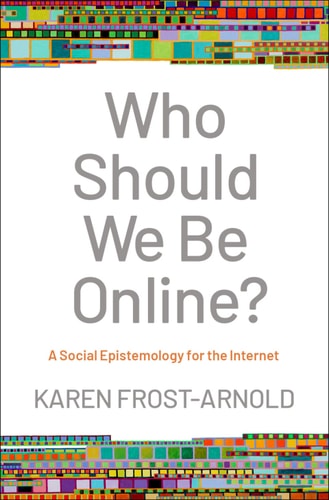
Who Should We Be Online?: A Social Epistemology for the Internet
0
0
As an Amazon Associate and affiliate partner, Menrva Books earns from qualifying purchases. Learn more
Author Description
Global inequalities and our social identities shape who we are, who we can be online, and what we know. From social media to search engines to Wikipedia, the internet is thoroughly embedded in how we produce, find, and share knowledge around the world. Who Should We Be Online? examines the challenges of the online world using numerous epistemological approaches. Tackling problems of online content moderation, fake news, and hoaxes, Frost-Arnold locates the role that sexism, racism, and other forms of oppression play in creating and sharing knowledge online.Timely and interdisciplinary, Who Should We Be Online? weaves together internet studies scholarship from across the humanities, social sciences, and computer science. Frost-Arnold recognizes that the internet can both fuel ignorance and misinformation and simultaneously offer knowledge to marginalized groups and activists. Presenting case studies of moderators, imposters, and other internet personas, Frost-Arnold explains the problems with our current internet ecosystem and imagines a more just online future. Who Should We Be Online? argues for a social epistemology that values truth and objectivity, while recognizing that inequalities shape our collective ability to attain these goals. Frost-Arnold proposes numerous suggestions and reform strategies to make the internet more conducive to knowledge production and sharing.
Menrva's Summary
THE THESIS
This book investigates how social identities and global inequalities influence the production, distribution, and reliability of knowledge within digital environments. Karen Frost-Arnold, a philosopher specializing in social epistemology, utilizes a multidisciplinary framework to analyze the internet's role in both spreading misinformation and empowering marginalized voices. She argues that achieving truth and objectivity online requires a critical understanding of how systemic oppression shapes our digital interactions and information ecosystems.
THE SCOPE MAP
What You Will Find
- Analysis of online content moderation, fake news, and digital hoaxes.
- A social epistemological framework for evaluating digital knowledge production.
- Case studies involving internet moderators, imposters, and various online personas.
- Proposed reform strategies for creating more equitable digital spaces.
Scope Limits
- The text does not provide a technical manual for software development or algorithmic engineering.
- It does not offer a comprehensive history of the internet's infrastructure.
THE AUTHORITY PERSPECTIVE
Experts recognize this work as a significant contribution to the intersection of philosophy and digital media studies. Readers frequently note the accessibility of the prose despite the complex academic subject matter, making it a valuable resource for both students and researchers in the field.
Page Count:
278
Publication Date:
2022-01-01
Publisher:
Oxford University Press
ISBN-10:
0190089202
ISBN-13:
9780190089207
Philosophy
Sociology
Technology and Society
Media Studies
Community Tags
Similar Books