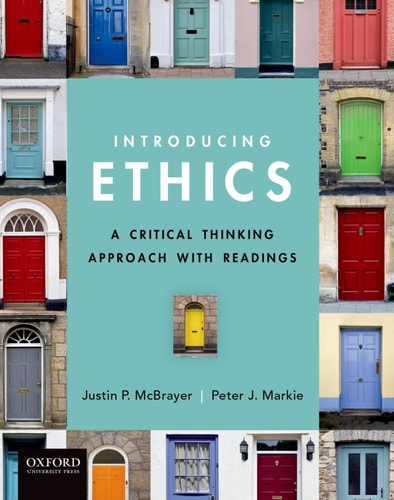
Introducing Ethics: A Critical Thinking Approach with Readings
0
0
As an Amazon Associate and affiliate partner, Menrva Books earns from qualifying purchases. Learn more
Author Description
Introducing Ethics: A Critical Thinking Approach with Readings combines guiding commentary and questions with a rich selection of concise, carefully edited, and accessible readings on ethical theory and contemporary moral issues. This unique introduction shows students how to do philosophy by first analyzing texts--identifying ethical positions and the arguments that support them--and then evaluating the truth of those positions and the soundness of the arguments. In doing so, it provides students with a uniquely engaging introduction to ethics that also hones their critical thinking skills.FEATURES* A unique Unit 1 gives students the conceptual tools to "do" philosophy with coverage of logic, arguments, moral reasoning, and reading and writing philosophy* Extensive coverage of the three main areas of ethics--metaethics, normative ethics, and applied ethics--addresses issues often ignored by other texts, including ethics vs. science, moral responsibility, moral vs. legal issues, torture, terrorism, and more* Unit and chapter introductions outline major themes and issues and explain why they matter* Reading questions precede the essays and focus students' studying on key points, while discussion questions follow the readings and help students move into the evaluation phase* "Argument Reconstruction Exercises" after each reading provide practice in identifying the premises and conclusions in the essays* An Instructor's Manual with Test Bank on CD is available to adopters* A Companion Website at www.oup.com/us/mcbrayer provides all the material contained on the CD along with student resources
Menrva's Summary
THE THESIS
This book investigates how students can effectively engage with ethical theory by applying rigorous critical thinking and logical analysis to primary source texts. Authors Justin P. McBrayer and Peter Markie, both established scholars in the field of philosophy, provide a structured framework that moves beyond passive reading. By teaching students to identify premises, evaluate arguments, and assess the soundness of moral positions, the text transforms the study of ethics into an active, analytical process.
THE SCOPE MAP
What You Will Find
- A foundational unit on logic, moral reasoning, and the mechanics of philosophical writing.
- Comprehensive coverage of metaethics, normative ethics, and applied ethics.
- Argument reconstruction exercises designed to build practical analytical skills.
- A curated selection of accessible readings covering contemporary moral issues such as terrorism, torture, and moral responsibility.
THE AUTHORITY PERSPECTIVE
Instructors and students frequently highlight this text for its pedagogical clarity and its successful integration of primary readings with instructional guidance. It is widely regarded as a foundational resource for undergraduate philosophy courses that prioritize the development of logical reasoning alongside ethical literacy.
Page Count:
752
Publication Date:
2013-12-16
Publisher:
Oxford University Press
ISBN-10:
0199793786
ISBN-13:
9780199793785
Philosophy
Critical thinking
Ethics
textbook
Education
Community Tags
Similar Books