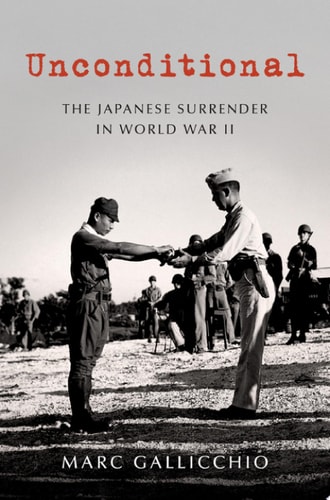
Unconditional
0
0
As an Amazon Associate and affiliate partner, Menrva Books earns from qualifying purchases. Learn more
Author Description
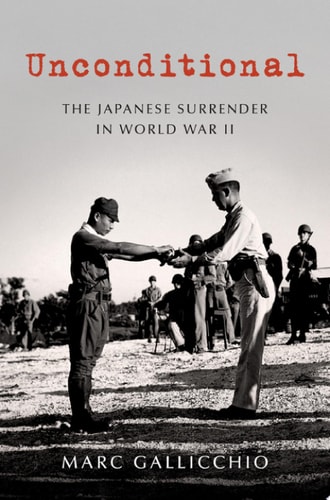
A New Look At The Drama That Lay Behind The End Of The War In The Pacific Signed On September 2, 1945 Aboard The American Battleship Uss Missouri In Tokyo Bay By Japanese And Allied Leaders, The Instrument Of Surrender That Formally Ended The War In The Pacific Brought To A Close One Of The Most Cataclysmic Engagements In History. Behind It Lay A Debate That Had Been Raging For Some Weeks Prior Among American Military And Political Leaders. The Surrender Fulfilled The Commitment That Franklin Roosevelt Had Made In 1943 At The Casablanca Conference That It Be Unconditional. Though Readily Accepted As Policy At The Time, After Roosevelt's Death In April 1945 Support For Unconditional Surrender Wavered, Particularly Among Republicans In Congress, When The Bloody Campaigns On Iwo Jima And Okinawa Made Clear The Cost Of Military Victory Against Japan. Germany's Unconditional Surrender In May 1945 Had Been One Thing; The War In The Pacific Was Another. Many Conservatives Favored A Negotiated Surrender. Though This Was The Last Time American Forces Would Impose Surrender Unconditionally, Questions Surrounding It Continued Through The 1950s And 1960s--with The Korean And Vietnam Wars--when Liberal And Conservative Views Reversed, Including Over The Definition Of Peace With Honor. The Subject Was Revived During The Ceremonies Surrounding The 50th Anniversary In 1995, And The Gulf And Iraq Wars, When The Subjects Of Exit Strategies And Accomplished Missions Were Debated. Marc Gallicchio Reveals How And Why The Surrender In Tokyo Bay Unfolded As It Did And The Principle Figures Behind It, Including George C. Marshall And Douglas Macarthur. The Latter Would Effectively Become The Leader Of Japan And His Tenure, And Indeed The Very Nature Of The American Occupation, Was Shaped By The Nature Of The Surrender. Most Importantly, Gallicchio Reveals How The Policy Of Unconditional Surrender Has Shaped Our Memory And Our Understanding Of World War Ii.
Menrva's Summary
THE THESIS
How did the policy of unconditional surrender shape the conclusion of the Pacific War and influence subsequent American military and political strategy? Marc Gallicchio, a historian specializing in American foreign policy and the Pacific War, examines the internal debates among U.S. leadership regarding the terms of Japan's capitulation. He argues that the commitment to unconditional surrender, established by Franklin Roosevelt, became a contentious political issue that evolved in meaning and application throughout the 20th century.
THE SCOPE MAP
What You Will Find
- Analysis of the Casablanca Conference and the origins of the unconditional surrender policy.
- Examination of the political friction between the Roosevelt administration and congressional Republicans.
- Case studies on the influence of military leaders like George C. Marshall and Douglas MacArthur.
- Historical context regarding the shift in political views on surrender during the Korean and Vietnam Wars.
Scope Limits
- The text does not provide a comprehensive military history of every Pacific theater battle.
- It does not focus on the internal Japanese political decision-making process beyond its interaction with American policy.
THE AUTHORITY PERSPECTIVE
Historians and scholars of the Pacific War frequently cite this work for its detailed exploration of the political maneuvering behind the end of the conflict. Readers often note the academic rigor of the prose and the author's ability to connect historical policy to later American military interventions.
Page Count:
320
Publication Date:
2020-01-01
Publisher:
Oxford University Press
ISBN-10:
0190091118
ISBN-13:
9780190091118
History
Diplomatic History
World War
Military History
Community Tags
Similar Books