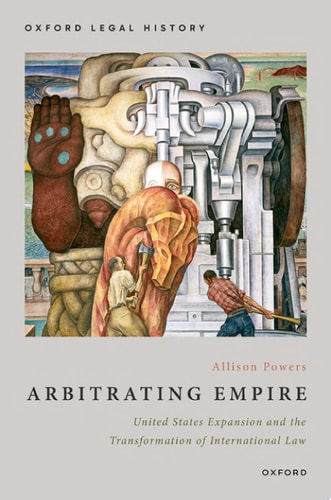
Arbitrating Empire: United States Expansion and the Transformation of International Law
0
0
As an Amazon Associate and affiliate partner, Menrva Books earns from qualifying purchases. Learn more
Author Description
Arbitrating Empire Offers A New History Of The Emergence Of The United States As A Global Power-one Shaped As Much By Attempts To Insulate The Us Justice System From International Scrutiny As It Was By Efforts To Project Influence Across The Globe. Drawing On Extensive Archival Research In The United States, Mexico, Panama, And The United Kingdom, Allison Powers Traces How Thousands Of Dispossessed Residents Of Us-annexed Territories Petitioned International Claims Commissions Between The 1870s And The 1930s To Hold The United States Accountable For Myriad Forms Of State Violence. Through Attention To Their Unexpected Claims, The Book Demonstrates How Colonial Subjects, Refugees From Slavery, And Migrant Workers Transformed A Series Of Tribunals Designed To Establish The Legality Of United States Intervention Into Sites Through Which To Challenge The Legitimacy Of The Us Justice System Itself. Moving Between The Stories Of Claimants Who Challenged Racialized Violence And Economic Dispossession In Arizona Copper Mines, Texas Cotton Fields, Samoan Port Cities, Cuban Sugar Plantations, The Locks And Stops Of The Panama Canal Zone, And The Tribunals Convened In Metropolitan Capitals To Which They Turned For Redress, The Book Uncovers How Everyday People Used International Law To Hold The United States Accountable For State-sanctioned Violence During The First Decades Of The Twentieth Century-and Why The State Department's Attempts To Mitigate This Exposure Remade International Law-- Provided By Publisher.
Menrva's Summary
THE THESIS
This book investigates how the United States navigated the tension between its emergence as a global power and the necessity of insulating its domestic justice system from international scrutiny. Allison Powers, a legal historian, utilizes extensive archival research from multiple nations to argue that international claims commissions, originally intended to legitimize U.S. intervention, were repurposed by marginalized individuals to challenge state-sanctioned violence. The text posits that the U.S. State Department's efforts to mitigate this legal exposure fundamentally reshaped the development of international law between the 1870s and the 1930s.
THE SCOPE MAP
What You Will Find
- Analysis of international claims commissions operating between the 1870s and the 1930s.
- Case studies involving colonial subjects, refugees from slavery, and migrant workers in diverse territories including Arizona, Texas, Samoa, Cuba, and the Panama Canal Zone.
- Examination of how individual petitions challenged racialized violence and economic dispossession.
- Documentation of State Department strategies to manage international legal accountability.
Scope Limits
- The study focuses primarily on the period ending in the 1930s and does not address post-World War II international legal frameworks.
- The analysis is limited to the specific claims commissions and territories identified in the archival research.
THE AUTHORITY PERSPECTIVE
Experts identify this work as a significant contribution to the intersection of legal history and imperial studies. Readers frequently note the academic density of the prose and the meticulous use of primary source materials to reconstruct the experiences of marginalized claimants.
Page Count:
280
Publication Date:
2024-12-11
Publisher:
Oxford University Press
ISBN-10:
0190093005
ISBN-13:
9780190093006
History
International Law
Legal History
United States
Colonialism
Americas
Central America
Community Tags
Similar Books