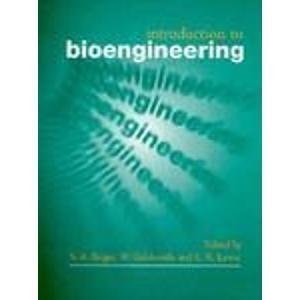
Introduction to Bioengineering
0
0
As an Amazon Associate and affiliate partner, Menrva Books earns from qualifying purchases. Learn more
Author Description
Bioengineering in this book is taken to be the application of the concepts and methods of the physical sciences and mathematics in an engineering approach to problems in the life sciences. The aim of such studies is to understand the physical process and engineering aspects of a system's performance both under normal and abnormal conditions, and to design and use diagnostic or artificial devices meant to measure, improve, safeguard, or replace life functions. The material in this book is based on the course given at the University of California at Berkeley. The text contains contributions from instructors in mechanical, electrical, chemical, and nuclear engineering as well as from orthopedics and human biodynamics. The topics mirror the fundamental engineering science taught in the various engineering areas, usually at the intermediate university level, but as applied to problems in the biological world. The basic principles of engineering science are presented so that students will be able to grasp the essence of a particular topic quickly, whatever their background. Many worked examples and problems (together with selected solutions) are included throughout the text.
Menrva's Summary
THE THESIS
This text investigates the application of physical sciences and mathematical engineering principles to solve complex problems within the life sciences. The material originates from a multidisciplinary course at the University of California at Berkeley, incorporating expertise from mechanical, electrical, chemical, and nuclear engineering, alongside orthopedics and human biodynamics. The primary argument posits that biological systems can be analyzed and improved through the same rigorous engineering frameworks applied to mechanical systems, facilitating the design of diagnostic and artificial devices.
THE SCOPE MAP
What You Will Find
- Fundamental engineering science principles applied to biological systems
- Analysis of system performance under both normal and abnormal conditions
- Design methodologies for diagnostic and life-replacement devices
- Extensive collection of worked examples and practice problems with selected solutions
THE AUTHORITY PERSPECTIVE
Experts recognize this text as a foundational resource for students bridging the gap between traditional engineering disciplines and biological applications. Readers frequently note the accessibility of the material, which is structured to provide a clear grasp of engineering concepts regardless of the student's specific academic background.
Page Count:
526
Publication Date:
1996-01-01
Publisher:
Oxford Univ Pr (Txt)
ISBN-10:
0199856516
ISBN-13:
9780199856510
Science
Engineering
Mathematics
Bioengineering
textbook
Life sciences
Community Tags
Similar Books