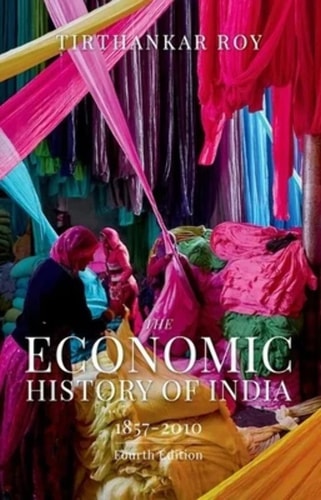
The Economic History of India: 1857-2010
0
0
As an Amazon Associate and affiliate partner, Menrva Books earns from qualifying purchases. Learn more
Author Description
From the end of the eighteenth century, two distinct global processes began to transform livelihoods and living conditions in the South Asia region. These were the rise of British colonial rule and globalization, that is, the integration of the region in the emerging world markets for goods, capital, and labour services. Two hundred years later, India was the home to many of the world's poorest people as well as one of the fastest growing market economies in the world. Does a study of the past help to explain the paradox of growth amidst poverty? The Economic History of India: 1857-2010 claims that the roots of this paradox go back to India's colonial past, when internal factors like geography and external forces like globalization and imperial rule created prosperity in some areas and poverty in others. Looking at the recent scholarship in this area, this revised edition covers new subjects like environment and princely states. The author sets out the key questions that a study of long-run economic change in India should begin with and shows how historians have answered these questions and where the gaps remain.
Menrva's Summary
THE THESIS
This book investigates the historical origins of India's economic paradox, specifically the coexistence of rapid market growth and persistent poverty from the colonial era to the present. Tirthankar Roy, a professor of economic history, utilizes a synthesis of recent scholarship and quantitative data to analyze how internal geographic factors and external forces like imperial rule and global market integration shaped the nation's economic trajectory. The author provides a framework for understanding long-run economic change by identifying key historical questions and evaluating the current state of academic consensus and remaining research gaps.
THE SCOPE MAP
What You Will Find
- Analysis of the impact of British colonial rule on regional economic development
- Examination of India's integration into global markets for goods, capital, and labor
- Discussion of environmental factors and the role of princely states in economic outcomes
- A critical review of historiographical debates regarding long-run growth and poverty
Scope Limits
- The text focuses primarily on economic and structural history rather than detailed political or social narratives
- The analysis is constrained to the period between 1857 and 2010
THE AUTHORITY PERSPECTIVE
Experts and academics recognize this work as a comprehensive and authoritative survey of Indian economic history that effectively bridges the gap between colonial legacies and modern development. Readers frequently note the academic density of the prose, making it a standard reference for students and researchers interested in the economic evolution of South Asia.
Page Count:
384
Publication Date:
2020-11-12
Publisher:
Oxford University Press, USA
ISBN-10:
0190128291
ISBN-13:
9780190128296
History
Economics
Asia
India
Globalization
Economic History
Colonialism
New Used & Rental Textbooks
Community Tags
Similar Books