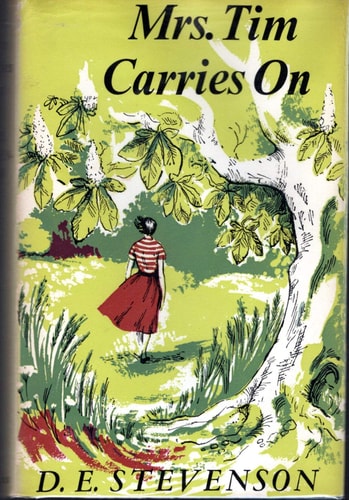
Mrs. Tim carries on
0
0
As an Amazon Associate and affiliate partner, Menrva Books earns from qualifying purchases. Learn more
Author Description
There is so much War News in News Bulletins, in Newspapers, and so much talk about the war that I do not intend to write about it in my diary. Indeed my diary is a sort of escape from the war... though it is almost impossible to escape from the anxieties which it brings. Bestselling author D.E. Stevenson’s charming fictional alter-ego, Hester Christie—or “Mrs. Tim” as she is affectionately known to friends of her military husband—was first introduced to readers in Mrs. Tim of the Regiment, published in 1932. In 1941, Stevenson brought Mrs. Tim back in this delightful sequel, to lift spirits and boost morale in the early days of World War II. With her husband stationed in France, Hester finds plenty to keep her busy on the Home Front. From her first air raid and a harrowing but hilarious false alarm about a German invasion, to volunteering at the regiment’s “Comforts Depot,” guiding the romantic destinies of her pretty houseguest and an injured soldier, and making a flying visit to a blacked-out, slightly bedraggled London with its fighting spirit intact, Mrs. Tim does indeed carry on—in inimitable style. Mrs. Tim returns in two subsequent novels, Mrs Tim Gets a Job (1947) and Mrs Tim Flies Home (1952), all back in print for the first time in decades from Furrowed Middlebrow and Dean Street Press. This new edition features an introduction by Alexander McCall Smith. “She admirably preserves her lightness of touch, with a tinge of melancholy added, which perfectly suits the mood of 1940.” Glasgow Herald “This is not merely a war book to which cheerfulness keeps breaking in, it is a book of cheerfulness from which the war cannot be kept out... Major Tim’s amazing escape from Dunkirk is high drama superbly handled, and her word pictures are both lifelike and lively.” Manchester Evening News
Menrva's Summary
THE PULSE
Hester Christie, known as Mrs. Tim, attempts to maintain a sense of normalcy and domestic order on the British Home Front while her husband serves in the military during the early years of World War II. As the conflict encroaches upon her daily life, Hester navigates the anxieties of the era through her personal diary, which serves as a psychological refuge from the relentless news of the war. She balances the mundane responsibilities of household management and volunteer work with the unpredictable challenges of air raids and the emotional needs of those around her. The narrative framework is presented as an intimate, first-person account that captures the domestic experience of the war through a lens of resilience and wit. Her primary objective is to preserve the stability of her family and community despite the looming threat of invasion and the absence of her husband.
INSIDE THE PAGES
- First-person diary entry narrative style
- Focus on domestic life during wartime
- Humorous observations of social interactions
- Depiction of the British Home Front experience
- Themes of resilience and morale-boosting
- Character-driven interpersonal relationships
- Episodic structure reflecting daily life
- Historical context of early 1940s Britain
THE COLLECTIVE ECHO
Readers frequently highlight the balance between the lighthearted tone of the prose and the underlying tension of the wartime setting. Discussion often centers on the effectiveness of Hester Christie as a narrator who manages to remain optimistic without ignoring the realities of the conflict. Critics often point to the author's ability to capture the specific atmosphere of 1940s Britain, noting that the diary format allows for a personal connection to the protagonist. The work is often praised for its observational humor and its focus on the small, human moments that define life during a period of national crisis. Many readers appreciate how the book serves as both a historical document of the era's social climate and a character study of a woman finding strength in everyday tasks.
Page Count:
307
Publication Date:
1973-01-01
Publisher:
Holt, Rinehart and Winston
ISBN-10:
0030074916
ISBN-13:
9780030074912
Humor
classic
British literature
World War
Domestic
Historical
Contemporary
Community Tags
Similar Books