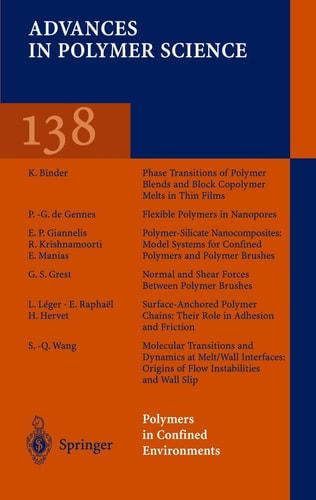
Grafting, Characterization Techniques, Kinetic Modeling
0
0
As an Amazon Associate and affiliate partner, Menrva Books earns from qualifying purchases. Learn more
Author Description
Most of the untreated surfaces of polymers used in industry are not hydrophilic but hydrophobic. It is, therefore, difficult to bond these nonpolar polymer sur faces directly to other substances like adhesives, printing inks, and paints because they generally consist of polar compounds. On the other hand, polymer surfaces generally adsorb proteins when brought into direct contact with a bio logical system, resulting in cell attachment or platelet aggregation. The protein adsorption and attachment of biological components trigger a subsequent series of mostly adverse biological reactions toward the polymeric materials. Therefore, the technologies for surface modification of polymers or regulation of the polymer surface interaction with other substances have been of prime importance in polymer applications from the advent of polymer industries. Some of the technologies have been directed to introduction of new function alities onto polymer surfaces. The new functionalities introduced include improved surface hydrophilicity, hydrophobicity, bio compatibility, conductivi ty, anti-fogging, anti-fouling, grazing, surface hardness, surface roughness, adhesion, lubrication, and antistatic property. Theoretically, there is a large dif ference in properties between the surface and the bulk of a material and only the outermost surface is enough to be taken into consideration when the sur face properties are concerned. However, this is not the case for polymer surfaces, as the physical structure of the outermost polymer surface is generally not fixed but continuously changing with time due to the microscopic Brownian motion of polymer segments.
Menrva's Summary
THE THESIS
This book investigates the critical challenge of modifying hydrophobic polymer surfaces to enhance their interaction with polar substances and biological systems. The author, H. Galina, addresses the inherent difficulties in bonding nonpolar polymer surfaces to adhesives, inks, and paints, and explains how untreated polymer surfaces readily adsorb proteins, leading to undesirable biological reactions. The work focuses on technologies for surface modification to introduce new functionalities, thereby expanding the applicability of polymers across various industrial and biomedical fields.
THE SCOPE MAP
- Techniques for grafting and surface modification of polymers.
- Characterization methods for altered polymer surfaces.
- Kinetic modeling of surface reactions and interactions.
- Discussion of surface properties such as hydrophilicity, biocompatibility, and adhesion.
THE AUTHORITY PERSPECTIVE
This text appears to be a technical monograph focused on advanced polymer surface modification. Its detailed examination of grafting techniques, characterization, and kinetic modeling suggests it is aimed at researchers and advanced students in polymer science and materials engineering. The depth of coverage indicates a specialized audience seeking in-depth knowledge on manipulating polymer surface properties for specific industrial and biomedical applications.
Page Count:
187
Publication Date:
1998-01-01
ISBN-10:
3540640169
Non-Fiction
Science
Surface Chemistry
Chemical Engineering
Community Tags
Similar Books