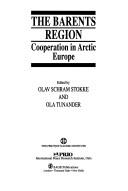
The Barents Region
0
0
As an Amazon Associate and affiliate partner, Menrva Books earns from qualifying purchases. Learn more
Author Description
Post-Cold War Europe has seen various regional initiatives launched along the former East-West divide. Ties and trade routes pre-dating 1914 are being taken up once again. Somewhat surprisingly, as this book reveals, the Barents Region in the Scandinavian and Russian Arctic is emerging as one of the most dynamic and versatile East-West initiatives in Europe. Its unique, two-pillared institutional structure ensures that state as well as local authorities are drawn into deliberations, as are representatives from the European Commission and the regional Saami organisation. The Barents Region surveys regional cooperation in Arctic Europe. With contributions from leading Scandinavian and Russian scholars on Northern affairs, this volume examines the Barents Region as a political initiative, its historical and institutional architecture and its contributions to economic and environmental management in the North. Particular attention is paid to the impact of the Barents Region on security in Arctic Europe and its relationship to the wider process of European integration.
Menrva's Summary
THE THESIS
The Barents Region emerges as a surprisingly dynamic East-West initiative in post-Cold War Europe. This volume examines regional cooperation in Arctic Europe, focusing on the Barents Region's unique two-pillared institutional structure that involves state and local authorities, the European Commission, and the Saami organization. Contributions from leading Scandinavian and Russian scholars explore its political initiative, historical and institutional architecture, and its role in economic and environmental management. The book also pays particular attention to the initiative's impact on security in Arctic Europe and its connection to broader European integration.
THE SCOPE MAP
- Analysis of the Barents Region as a political initiative.
- Examination of its historical and institutional architecture.
- Exploration of its contributions to economic and environmental management in the North.
- Assessment of the impact of the Barents Region on security in Arctic Europe.
- Discussion of its relationship to the wider process of European integration.
- Contributions from leading Scandinavian and Russian scholars on Northern affairs.
THE AUTHORITY PERSPECTIVE
This book is presented as a comprehensive survey of regional cooperation in Arctic Europe, drawing on expertise from Scandinavian and Russian scholars. It aims to provide an in-depth analysis of the Barents Region's political, historical, and institutional framework, as well as its economic, environmental, and security implications. The work is positioned as a key resource for understanding this specific East-West initiative within the broader context of European integration.
Page Count:
256
Publication Date:
1994-01-01
ISBN-10:
0803978979
ISBN-13:
9780803978973
Politics
History
Non-Fiction
International relations
Arctic Studies
Geopolitics
Community Tags
Similar Books