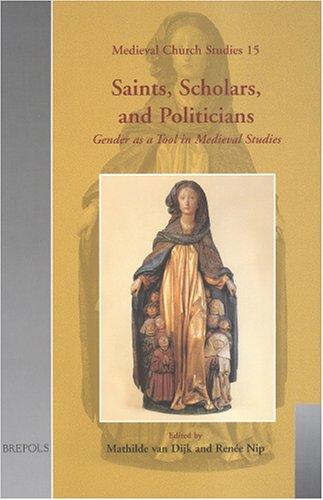
Saints, Scholars, and Politicians
0
0
As an Amazon Associate and affiliate partner, Menrva Books earns from qualifying purchases. Learn more
Author Description
Over the past eighteen years, gender has become a major analytical tool in medieval studies. The purpose of this volume is to evaluate its use and to search for ways in which to improve and enhance its value. The authors address the question of how gender relates to other tools of medieval research. Several articles criticize the way in which an exclusive focus on gender tends to obscure the impact of other factors, for instance class, politics, economy, or the genre in which a source is written. Other articles address 'wrong' ways of using gender, for instance monolithic or anachronistic views of what constitutes differences between men and women. The intention is that this selection of case studies further establishes and enhances the indispensability of gender as an analytical tool within medieval studies.--Jacket.
Menrva's Summary
THE THESIS
This volume critically examines the application and efficacy of gender as an analytical tool in medieval studies. The collection evaluates how gender intersects with other research methodologies, such as class, politics, and economics, with several contributors arguing that an exclusive focus on gender can obscure other significant factors. It also addresses problematic uses of gender analysis, including monolithic or anachronistic interpretations of male and female differences. Ultimately, the book aims to demonstrate and enhance the essential role of gender as an analytical framework within the field of medieval scholarship.
THE SCOPE MAP
- Analysis of gender as a primary analytical tool in medieval studies.
- Critique of exclusive focus on gender, highlighting the impact of class, politics, and economy.
- Discussion on the genre of source material and its influence on gender analysis.
- Examination of 'wrong' uses of gender, such as monolithic or anachronistic views.
- Presentation of case studies to illustrate and enhance gender as an analytical tool.
- Exploration of the relationship between gender and other medieval research methodologies.
THE AUTHORITY PERSPECTIVE
This collection is positioned as a critical evaluation of gender as an analytical tool within medieval studies. The contributors engage with the methodology by highlighting its strengths while also pointing out potential limitations and areas for improvement. The volume seeks to refine the application of gender analysis by considering its interplay with other socio-political and economic factors. It is intended for scholars and students engaged with medieval history and gender studies, aiming to establish gender analysis as an indispensable component of the field.
Page Count:
260
Publication Date:
2005-01-01
ISBN-10:
2503516548
ISBN-13:
9782503516547
Non-Fiction
History
Social History
Academic
Gender Studies
Community Tags
Similar Books