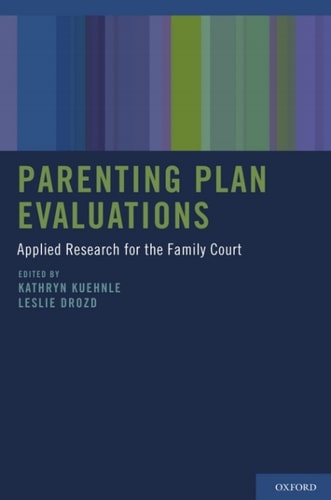
Parenting Plan Evaluations: Applied Research for the Family Court
0
0
As an Amazon Associate and affiliate partner, Menrva Books earns from qualifying purchases. Learn more
Author Description
When conducting parenting plan evaluations, mental health professionals need to be aware of a myriad of different factors. More so than in any other form of forensic evaluation, they must have an understanding of the most current findings in developmental research, behavioral psychology, attachment theory, and legal issues to substantiate their opinions. As such there is an essential need for a text focused on translating and implementing research associated with the most important topics within the family court.This book addresses this gap in the literature by presenting an organized and in-depth analysis of the current research and offering specific recommendations for applying these findings to the evaluation process. Written by experts in the child custody arena, chapters cover issues associated with the most important and complex issues that arise in family court, such as attachment and overnight timesharing with very young children, dynamics between divorced parents and children's potential for resiliency, co-parenting children with chronic medical conditions and developmental disorders, domestic violence during separation and divorce, gay and lesbian co-parents, and relocation, among others. The scientific information provided in these chapters assists forensic mental health professionals to proffer empirically-based opinions, conclusions and recommendations. Parenting Plan Evaluations is a must-read for legal practitioners, family law judges and attorneys, and other professionals seeking to understand more about the science behind child custody evaluations.
Menrva's Summary
THE THESIS
This book investigates how mental health professionals can bridge the gap between complex developmental research and the practical demands of family court evaluations. Authors Kathryn Kuehnle and Leslie Drozd, both experts in child custody, provide a systematic framework for integrating findings from attachment theory, behavioral psychology, and legal standards. The text serves as a guide for forensic practitioners to substantiate their clinical opinions with empirical data, ensuring that recommendations regarding child custody are grounded in scientific rigor rather than subjective assessment.
THE SCOPE MAP
What You Will Find
- Analysis of attachment theory and overnight timesharing protocols for infants and toddlers.
- Methodologies for evaluating co-parenting dynamics in cases involving chronic medical conditions or developmental disorders.
- Evidence-based approaches to high-conflict scenarios, including domestic violence and relocation disputes.
- Frameworks for addressing diverse family structures, such as gay and lesbian co-parenting arrangements.
THE AUTHORITY PERSPECTIVE
Experts in the field of family law and forensic psychology recognize this text as a foundational resource for practitioners navigating the complexities of custody evaluations. Readers frequently note the high density of the prose, which effectively translates academic research into actionable clinical strategies for the courtroom.
Page Count:
640
Publication Date:
2012-01-01
Publisher:
Oxford University Press
ISBN-10:
0199921253
ISBN-13:
9780199921256
Psychology
Family Law
Forensic Psychology
Parenting
Law
Community Tags
Similar Books