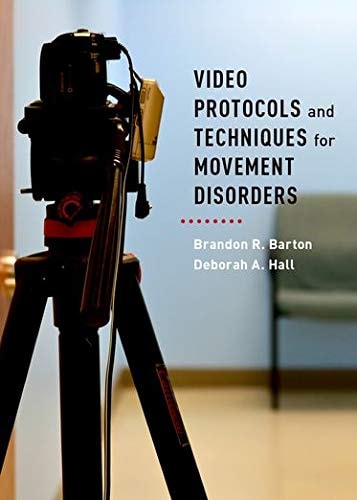
Video Protocols and Techniques for Movement Disorders
0
0
As an Amazon Associate and affiliate partner, Menrva Books earns from qualifying purchases. Learn more
Author Description
Your purchase of Video Protocols and Techniques for Movement Disorders provides you personal access to this online-only product as part of Oxford Medicine Online (www.oxfordmedicine.com). At the time of this printing, Oxford Medicine Online allows you to print, save, cite, email, and share content; download high-resolution figures as PowerPoint® slides; save often-used books, chapters, or searches; annotate; and quickly jump to other chapters or related material on a mobile-optimized platform. Oxford Medicine Online's applicable Privacy Policy and Legal Notice (available at www.oxfordmedicine.com) shall govern your use of the site. Video Protocols and Techniques for Movement Disorders presents this visually-based subspecialty through a truly unique product, illustrating how to establish a start-of-the-art videotaping workspace as well as how to instruct patients on how to participate in videotaped examination. The authors cover various technical issues-space, lighting, equipment-as well as medical protocols related to filming movement disorders, accounting for patient variability and abilities. This essential guide teaches the reader how to capture the key features of a given patient's disorder, detailing the ideal interactions between the videographer and patient. Issues of video storage and editing are addressed in practical terms.
Menrva's Summary
THE THESIS
This work investigates the technical and procedural requirements for effectively documenting movement disorders through high-quality video recording. Authors Brandon R. Barton and Deborah A. Hall provide a comprehensive framework for clinicians to establish professional-grade recording environments. By addressing both the physical constraints of a clinical workspace and the interpersonal dynamics required during patient examinations, the authors argue that standardized video protocols are vital for accurate diagnostic assessment and longitudinal tracking of neurological conditions.
THE SCOPE MAP
What You Will Find
- Technical specifications for clinical recording spaces, including lighting and equipment selection.
- Standardized medical protocols for conducting patient examinations on camera.
- Methodologies for effective interaction between the videographer and the patient to capture diagnostic features.
- Practical guidance on video storage, editing, and digital asset management.
THE AUTHORITY PERSPECTIVE
Experts in the field of neurology recognize this as a specialized resource for clinicians seeking to improve their diagnostic documentation. Readers frequently note the practical utility of the technical guidelines provided for setting up a modern, mobile-optimized clinical recording environment.
Page Count:
32
Publication Date:
2015-11-30
Publisher:
Oxford University Press
ISBN-10:
0199948518
ISBN-13:
9780199948512
Reference
Medical Technology
Medicine
Neurology
Community Tags
Similar Books