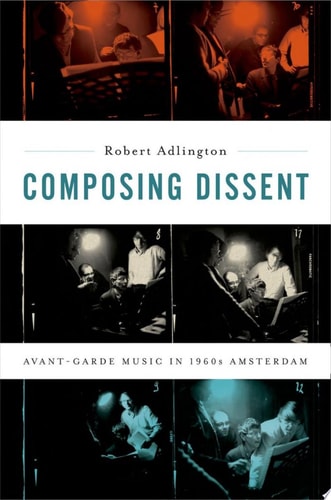
Composing Dissent: Avant-garde Music in 1960s Amsterdam
0
0
As an Amazon Associate and affiliate partner, Menrva Books earns from qualifying purchases. Learn more
Author Description
The 1960s saw the emergence in the Netherlands of a generation of avant-garde musicians (including figures such as Louis Andriessen, Willem Breuker, Reinbert de Leeuw and Misha Mengelberg) who were to gain international standing and influence as composers, performers and teachers, and who had a defining impact upon Dutch musical life. Fundamental to their activities in the sixties was a pronounced commitment to social and political engagement. The lively culture of activism and dissent on the streets of Amsterdam prompted an array of vigorous responses from these musicians, including collaborations with countercultural and protest groups, campaigns and direct action against established musical institutions, new grassroots performing associations, political concerts, polemicising within musical works, and the advocacy of new, more 'democratic' relationships with both performers and audiences. These activities laid the basis for the unique new music scene that emerged in the Netherlands in the 1970s and which has been influential upon performers and composers worldwide.This book is the first sustained scholarly examination of this subject. It presents the Dutch experience as an exemplary case study in the complex and conflictual encounter of the musical avant-garde with the decade's currents of social change. The narrative is structured around a number of the decade's defining topoi: modernisation and 'the new'; anarchy; participation; politics; self-management; and popular music. Dutch avant-garde musicians engaged actively with each of these themes, but in so doing they found themselves faced with distinct and sometimes intractable challenges, caused by the chafing of their political and aesthetic commitments. In charting a broad chronological progress from the commencement of work on Peter Schat's Labyrint in 1961 to the premiere of Louis Andriessen's Volkslied in 1971, this book traces the successive attempts of Dutch avant-garde musicians to reconcile the era's e
Menrva's Summary
THE THESIS
This book investigates how a generation of Dutch avant-garde musicians navigated the intersection of radical political activism and aesthetic innovation during the 1960s. Robert Adlington, a scholar of twentieth-century music, utilizes archival research and historical analysis to examine how figures like Louis Andriessen and Willem Breuker challenged established musical institutions. The text argues that the unique Dutch music scene of the 1970s was a direct result of the intense, often conflictual, social engagement practiced by these composers throughout the preceding decade.
THE SCOPE MAP
What You Will Find
- A chronological study of Dutch avant-garde music from 1961 to 1971.
- Analysis of key themes including anarchy, self-management, and the influence of popular music.
- Examination of direct action campaigns against traditional musical establishments.
- Case studies on the collaborative efforts between composers and countercultural protest groups.
THE AUTHORITY PERSPECTIVE
Experts recognize this work as the first sustained scholarly examination of the Dutch avant-garde movement during this period. Readers frequently note the academic rigor and the detailed contextualization of musical works within the broader political climate of 1960s Amsterdam.
Page Count:
384
Publication Date:
2013-08-09
Publisher:
Oxford University Press
ISBN-10:
0199981019
ISBN-13:
9780199981014
History
Biography
Music
Politics
Netherlands
Avant-garde
Music European
Community Tags
Similar Books