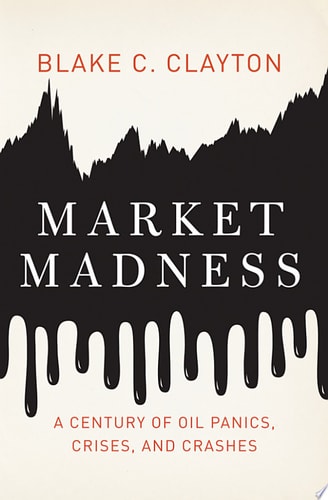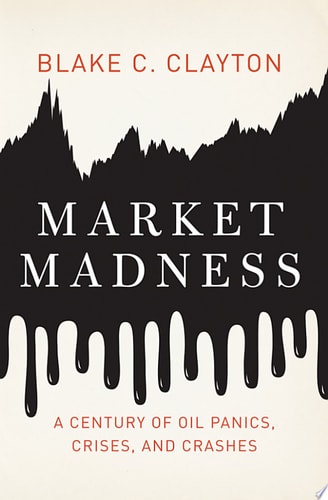
Market Madness: A Century of Oil Panics, Crises, and Crashes
0
0
As an Amazon Associate and affiliate partner, Menrva Books earns from qualifying purchases. Learn more
Author Description
Stock market booms are cause for celebration. But when oil prices soar because supplies are failing to keep up with demand, the response is nearly always apocalyptic. Predictions of the end of oil can create anxiety on Wall Street and in Washington, stoking fears that production has hit a ceiling and prices will rise in perpetuity. Yet these dire visions have always proven wrong.Market Madness is the story of four waves of American anxiety over the last 100 years about a looming end to oil reserves. Their sweeping pattern-as large price increases lead to widespread shortage fears that eventually dissipate when oil production rises again and prices moderate-has defined the wild price swings in the oil market down to the present day.Blake Clayton, a Wall Street stock analyst and adjunct fellow at the Council on Foreign Relations, makes the case for the need for better information, communication and transparency. While these measures will not eliminate volatility and unpredictability completely, they would mitigate unnecessary price spikes and improve both investor and government decision-making.Market Madness is the first study to employ Nobel Laureate economist Robert Shiller's "new era economics" beyond the markets to which he famously applied it-the 1990s dot-com equity market and the mid-2000s housing market-in order to better understand the dynamics of speculative bubbles and irrationality in the commodities markets. In so doing, it breaks new ground in illuminating how mass beliefs about the future of a vital asset like oil take shape and what the future of energy may hold.
Menrva's Summary
THE THESIS
This book investigates the recurring cycle of panic and irrationality surrounding oil supply, questioning why market participants consistently predict the end of oil despite historical evidence to the contrary. Blake C. Clayton, a Wall Street analyst and fellow at the Council on Foreign Relations, utilizes the framework of "new era economics" to analyze a century of American energy anxiety. By examining four distinct waves of market hysteria, he argues that improved transparency and better communication are necessary to mitigate the volatility caused by speculative bubbles in the commodities sector.
THE SCOPE MAP
What You Will Find
- A historical analysis of four major waves of American oil supply anxiety over the last 100 years.
- Application of Robert Shiller's "new era economics" to commodity markets rather than equity or housing markets.
- Examination of the psychological and social factors that drive speculative bubbles in energy pricing.
- Proposed policy and informational frameworks to reduce unnecessary price spikes and improve decision-making for investors and government officials.
THE AUTHORITY PERSPECTIVE
Experts recognize this work as a significant contribution to the study of commodity market behavior and the application of behavioral economics to energy policy. Readers frequently note the clarity with which the author connects historical market patterns to modern investor psychology.
Page Count:
248
Publication Date:
2015-02-02
Publisher:
Oxford University Press
ISBN-10:
0199990050
ISBN-13:
9780199990054
Economics
Business
History
Finance
Energy policy
Energy
Commodities
Economics history
United States
Community Tags
Similar Books